
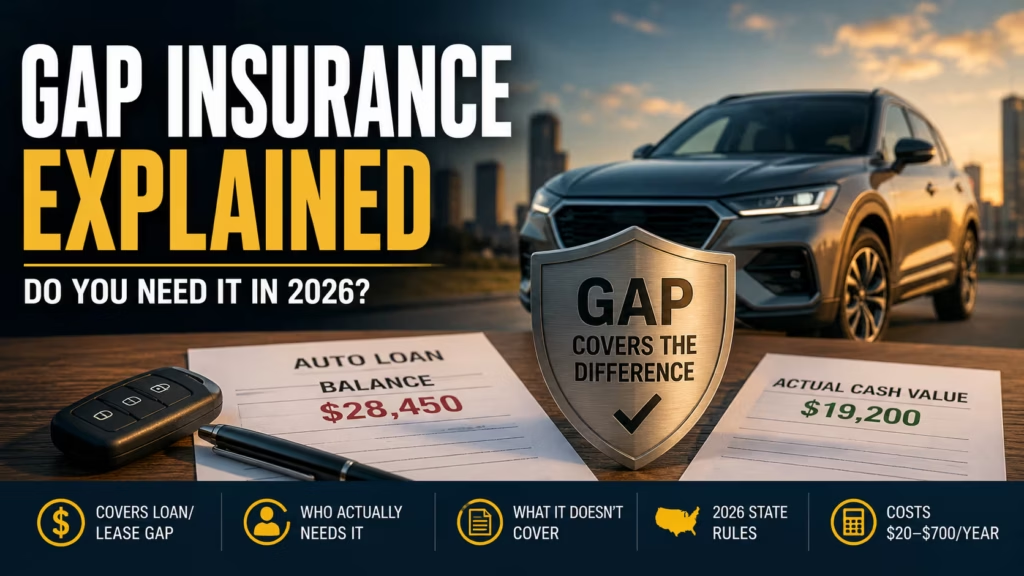
Gap insurance, explained simply, pays the difference between what your car is worth and what you still owe your lender if the car is totaled or stolen — and in 2026 it costs $20 to $100 a year through most auto insurers, or $400 to $700 as a one-time fee if you buy it at the dealership. Do you need it? Mostly, that comes down to your down payment, your loan length, and how fast your specific vehicle loses value, not a one-size-fits-all rule. This guide breaks down exactly how gap insurance works, what it costs depending on where you buy it, who genuinely needs it, what it won’t pay for, and the state rules now regulating how dealers can sell it.
Key Takeaway: Gap insurance covers the difference between your car loan or lease balance and your vehicle’s actual cash value if it’s totaled or stolen. It typically costs $20 to $100 a year (around $88 a year on average) added to an auto insurance policy, versus $400 to $700 as a lump-sum dealer fee that’s usually financed with interest. You’re most likely to need it if you put down less than 20%, financed for 60 months or longer, rolled over negative equity from a previous loan, lease your vehicle, or drive something that depreciates unusually fast, like an EV or a luxury car. No state requires gap insurance by law, but several — including California, Florida, Colorado, and Missouri — now regulate how dealers price, disclose, and refund it.
Every dealership finance office asks the same question at the end of the paperwork: do you want to add gap coverage? Most buyers say yes or no in under thirty seconds, without really knowing what they’re agreeing to or what it costs anywhere else. That decision is worth more than thirty seconds, because the same protection can cost $90 a year from your insurer or $700 up front at the dealer — for the exact same coverage. This guide walks through what gap insurance actually is, when it pays off, and when it’s just an add-on you don’t need.
Navigate This Guide:
- What Is Gap Insurance and How Does It Work?
- How Much Does Gap Insurance Cost in 2026?
- Do You Need Gap Insurance? 5 Signs You’re at Risk
- Gap Insurance for New, Used, and Leased Cars
- Where Should You Buy Gap Insurance?
- What Doesn’t Gap Insurance Cover?
- Is Gap Insurance Required by Law? 2026 State Rules
- Gap Insurance for EVs and Fast-Depreciating Cars
- When Can You Cancel Gap Insurance?
- How to Get the Cheapest Gap Insurance Quote
- Frequently Asked Questions
What Is Gap Insurance and How Does It Work?
Gap insurance, short for guaranteed asset protection, is optional coverage that pays the “gap” between your car’s actual cash value and what you still owe on your auto loan or lease if the vehicle is declared a total loss from an accident, theft, or another covered event. It’s designed to work alongside your comprehensive and collision coverage, not instead of it — your regular insurer pays out the car’s depreciated value first, and gap coverage picks up whatever loan balance is left over.
Here’s the mechanic in a real example: say you owe $30,000 on your car loan, and the car is totaled with an actual cash value of $25,000. Standard comprehensive or collision coverage pays that $25,000, minus your deductible. Without gap insurance, you’re still on the hook for the remaining $5,000 to your lender — for a car you no longer have. With gap coverage, that $5,000 gap gets paid, and you generally owe only your deductible.
The reason a gap exists at all comes down to depreciation outrunning your loan payoff. A new car loses roughly 20% of its value in the first year alone, according to Insurance Information Institute and Kelley Blue Book data, and early loan payments go mostly toward interest rather than principal. For a stretch of months or years, what you owe can sit well above what the car is actually worth.
How Much Does Gap Insurance Cost in 2026?
Gap insurance is one of the few auto coverages where the price gap between sellers is larger than the coverage gap it’s protecting. Buying it as an add-on to your existing auto insurance policy typically runs $20 to $100 a year, averaging close to $88 a year nationally. Buying the same protection from a dealership or lender, bundled into your loan as a one-time gap waiver, typically costs $400 to $700, and sometimes more.
Through an Insurer
Flat Fee
in Year One
Loan Term Length
The difference isn’t just the sticker price. A dealer’s $700 gap fee is usually rolled into your loan principal, which means you pay interest on it for as long as you carry the loan — turning a $700 charge into a meaningfully larger real cost by the time it’s paid off. An insurer-added gap endorsement, by contrast, is billed with your regular premium and carries no financing interest.
Do You Need Gap Insurance? 5 Signs You’re at Risk
Gap insurance only pays out if your loan balance is higher than your car’s value at the moment it’s totaled. Whether that’s likely to happen to you comes down to a handful of factors you can check yourself before deciding.
If none of the above applies — a substantial down payment, a shorter loan term, and an average-depreciation vehicle — you likely have enough built-in equity that gap insurance would rarely, if ever, pay out.
Gap Insurance for New, Used, and Leased Cars
“Do I need gap insurance” has a different answer depending on whether the car is new, used, or leased, because each situation creates negative equity in a different way.
Where Should You Buy Gap Insurance?
Gap insurance is sold through three different channels, and the price gap between them is large enough that where you buy it matters as much as whether you buy it at all.
What Doesn’t Gap Insurance Cover?
Gap insurance is narrower than its name suggests. It bridges one specific number — the loan payoff minus the car’s actual cash value — and stops there.
- Your comprehensive or collision deductible. You’re generally still responsible for that amount even with gap coverage in force.
- Missed payments and late fees. Gap covers the loan payoff difference, not any past-due amounts already accrued before the total loss.
- Rolled-over negative equity from a prior loan. Many policies exclude negative equity you carried over from a previous vehicle and folded into the current loan.
- Extended warranties and add-on products. Balances tied to a service contract, warranty, or other financed add-ons are typically excluded from the payout.
- Mechanical breakdowns. Gap only applies to a total loss from an insurable event like an accident or theft, not a car that simply breaks down.
Is Gap Insurance Required by Law? 2026 State Rules
No state requires drivers to carry gap insurance the way every state requires liability coverage. But your lender or leasing company can require it as a contractual condition of the loan, and a growing number of states have passed laws specifically regulating how dealer-sold “gap waivers” can be priced, disclosed, and refunded — largely in response to complaints about high-pressure add-on sales.
The common thread across nearly every new state law is the same: dealers can still sell gap waivers, but they now have to disclose the price separately, can no longer bundle it silently into the loan without a signature of its own, and generally have to refund the unused portion if you pay off the loan or cancel early. If you bought a dealer gap waiver before your state’s current rules took effect, it’s worth checking whether you’re still owed a refund on early payoff.
Gap Insurance for EVs and Fast-Depreciating Cars
Electric vehicles are one of the categories where gap coverage tends to matter most. EVs are commonly financed rather than bought outright, and several models have shown steeper-than-average depreciation curves as battery technology, incentive rules, and the used-EV market have shifted quickly year to year. If you’re weighing coverage for a financed or leased EV, our guide to electric car insurance rates by state covers how EV premiums compare to gas vehicles, which is worth reading alongside a gap insurance decision since the two costs move together on a financed EV.
The same logic extends to any vehicle known for depreciating quickly — certain luxury sedans, sports cars, and models coming off generous manufacturer incentives that shrink resale values industry-wide. If your vehicle falls into one of these categories, check its projected depreciation curve before assuming a standard down payment is enough protection.
When Can You Cancel Gap Insurance?
Gap insurance has a natural expiration point built into the math: once your loan balance drops below your car’s actual cash value, there’s no gap left to insure. From that point forward, you’re paying for coverage that has nothing left to cover.
- Check your numbers periodically. Compare your loan payoff quote to your car’s current value on a tool like Kelley Blue Book every six to twelve months.
- Insurer-added coverage is easy to drop. Call your insurance company and remove the gap endorsement anytime; there’s typically no penalty for canceling once you’re no longer underwater.
- Dealer-financed gap waivers usually owe you a refund. If you paid a lump sum at purchase and pay off the loan early, most states now require a pro-rata refund of the unused portion — ask your lender for the exact figure rather than assuming it’s forfeited.
- Refinancing resets the math. If you refinance your loan, your original gap policy may no longer match your new balance or lender, so re-check whether you still need it and at what coverage level.
How to Get the Cheapest Gap Insurance Quote
The single biggest lever on gap insurance cost isn’t your driving record — it’s which of the three sellers you buy it from. These steps, taken in order, are what separate a $90-a-year policy from a $700 dealer fee for identical protection.
- Price it through your auto insurer first. Ask your current auto insurance company for a gap coverage quote before you sit down at the dealership finance desk.
- Compare at least three sources. Get a gap price from your insurer, your lender or credit union, and the dealership, then compare the total cost, including any financing interest on a dealer fee.
- Calculate your own loan-to-value ratio. Compare your loan balance to your car’s actual cash value using a payoff quote and a valuation tool like Kelley Blue Book before you assume you need coverage at all.
- Check the payout cap and exclusions. Read the policy for any maximum payout limit and confirm what it excludes, such as your deductible or rolled-over negative equity, before you buy.
- Avoid financing a dealer gap fee if you can pay cash for it. Rolling a $400 to $700 dealer gap fee into your loan means paying interest on it for the life of the loan.
- Re-shop or cancel once you have positive equity. Check your payoff quote periodically and cancel coverage once your loan balance drops below the car’s actual cash value.
- Confirm your refund rights if you bought it from a dealer. States including California, Colorado, Florida, and Missouri require a pro-rata refund of the unearned portion if you cancel or pay off the loan early.
Frequently Asked Questions About Gap Insurance
What does gap insurance actually cover?
Gap insurance pays the difference between your car’s actual cash value at the time of a total loss and the remaining balance on your auto loan or lease, after your comprehensive or collision coverage pays out. It only applies when your loan or lease balance is higher than the car’s depreciated value.
How much does gap insurance cost in 2026?
Adding gap coverage to an existing auto insurance policy typically costs $20 to $100 a year, or roughly $3 to $20 a month, with a national average close to $88 a year. Buying the same protection as a one-time gap waiver from a dealership or lender usually costs $400 to $700, often financed into the loan with interest.
Do I need gap insurance if I put 20% down?
Usually not. A 20% down payment is generally enough to offset the roughly 20% a new car loses in its first year, according to Insurance Information Institute and Kelley Blue Book data, which means your loan balance and the car’s value stay close enough that gap coverage adds little practical protection.
Is gap insurance required by law?
No state requires drivers to carry gap insurance. Some lenders and nearly all leasing companies require it contractually as a condition of the loan or lease, and a growing number of states, including California, Florida, Colorado, and Missouri, regulate how dealer-sold gap waivers can be priced, disclosed, and refunded.
Can I buy gap insurance after I’ve already financed the car?
In most cases, yes. Many auto insurers let you add gap coverage to an existing policy within the first few years of a loan or lease, sometimes with a limit on vehicle age or mileage, which is generally cheaper than the one-time fee a dealership charges at the time of purchase.
Does gap insurance cover my deductible or missed payments?
Typically no. Most gap policies exclude your comprehensive or collision deductible, past-due payments, late fees, extended warranty balances, and negative equity that was rolled over from a previous loan, unless the policy specifically states otherwise.
Financing or Leasing a Car? Compare Full-Coverage Quotes First
Gap insurance only works alongside comprehensive and collision coverage — see real 2026 quotes from 30+ top carriers before you decide what to add at the dealership.
GET YOUR 2026 CAR INSURANCE QUOTESIs Gap Insurance Worth It in 2026?
For a specific, identifiable group of drivers, yes — anyone who put down less than 20%, financed for 60 months or longer, rolled over negative equity, or is leasing without built-in gap coverage is carrying real exposure that a $20-to-$100-a-year policy closes cheaply. For a driver with a substantial down payment on a car that holds its value normally, gap insurance is closer to an unnecessary add-on than genuine protection.
The one decision nearly every buyer gets wrong isn’t whether to buy gap insurance — it’s where. Paying $700 financed at the dealership for coverage your own insurer would sell for under $100 a year is the single most avoidable overpayment in the entire car-buying process. A five-minute call to your insurer before you sign anything at the finance desk is the highest-leverage move available, regardless of which side of the “do I need it” question you land on.
Sources: Insurance Information Institute (Triple-I), National Association of Insurance Commissioners (NAIC), Consumer Financial Protection Bureau (CFPB), Federal Trade Commission (FTC), New York State Department of Financial Services, California Office of the Attorney General, Kelley Blue Book (KBB), Experian Automotive, AM Best, state legislative records (California AB 2311/SB 1311, Colorado HB 23-1181, Missouri SB 398, Florida SB 902), 2026 industry rate aggregates.