
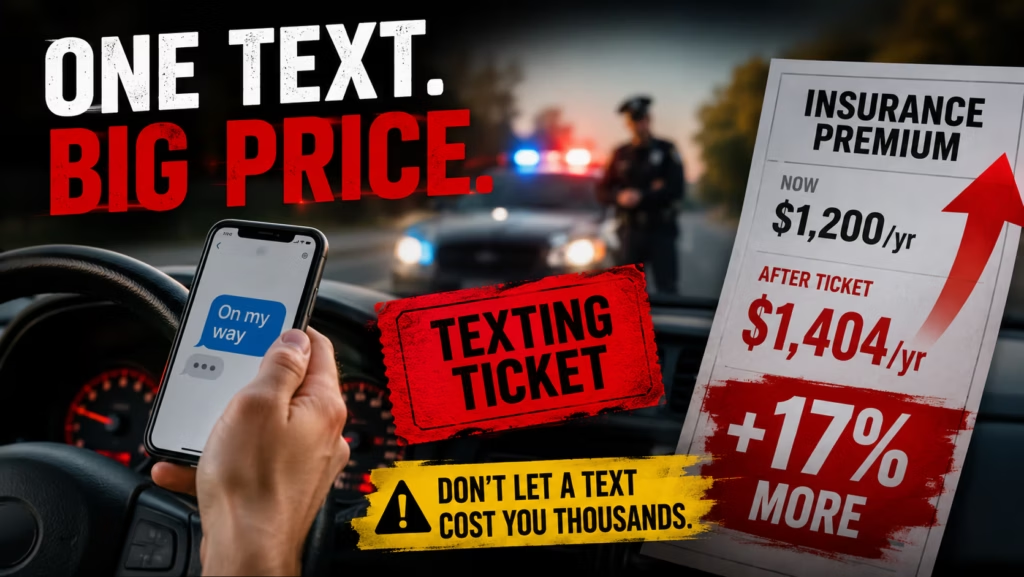
The distracted driving crisis isn’t just a safety hazard — it’s a financial grenade aimed directly at your wallet. A single texting-while-driving ticket in 2026 can detonate your insurance premium by 17% overnight, and the blast radius lasts 3 to 5 years. The worst part? The surge in violations isn’t coming from teens. It’s experienced drivers — ages 36 to 45 and even seniors over 66 — who are getting caught at record rates, blindsiding their budgets.
Quick Answer: One distracted driving violation raises your annual car insurance cost by an average of 17% in 2026. For a typical $1,600 policy, that’s an extra $272 per year — or more than $1,000 over the surcharge period. If you have multiple violations or an at-fault accident tied to distraction, the hike can exceed 35%. The good news: specific moves like defensive driving courses, telematics programs, and aggressive quote shopping can eliminate or drastically shrink the penalty.
Insurance carriers aren’t waiting around. The 2026 LexisNexis U.S. Auto Insurance Trends Report confirms that distracted driving violations have skyrocketed 57% since 2022, while miles driven rose only 2%. That’s a pure behavioral explosion — and insurers have re-calibrated their algorithms to punish it. If your driving record shows a handheld device ticket, you’re now in a higher risk tier, paying more across the board, sometimes before you even know the violation hit your report.
Below, you’ll discover the exact numbers behind the spike, which drivers are getting hammered hardest, how to check if a ticket is secretly inflating your rate, and five proven strategies to reverse the damage — starting today.
📑 Jump to Section:
The Shocking 2026 Distracted Driving Numbers
The latest data from LexisNexis Risk Solutions paints a clear picture: phone addiction behind the wheel is exploding, and it’s hitting demographics insurers previously considered low-risk.
- 57% increase in distracted driving violations across all age groups since 2022.
- Over 70% spike among drivers aged 36–45 — the sharpest rise of any age bracket, shattering the myth that young drivers are the sole problem.
- 73% increase among drivers aged 66 and older, proving that smartphone distraction knows no generation.
- Total traffic violations have returned to pre-pandemic levels and remain stubbornly elevated.
- Miles driven increased by a mere 2%, meaning worse behavior — not more driving — is fueling the crisis.
Exactly How a Distracted Driving Ticket Affects Your Premium
You pay the fine — typically $100 to $400 — and think it’s over. Then your renewal notice arrives. The real penalty is the insurance surcharge, which dwarfs the ticket cost.
- Average national premium increase: 17% for a single texting/handheld device violation.
- Duration on your record: 3 to 5 years, depending on state and insurer.
- Compounded damage: A second violation or an at-fault accident caused by distraction can trigger surcharges of 30% to 50%, and some carriers may non-renew your policy altogether.
Let’s put that in real dollars. If your annual premium is $1,800, a 17% surcharge adds $306 per year. Over a 3-year penalty window, that’s $918 — nearly ten times the cost of the average ticket fine. In high-premium states like New York, Florida, or Louisiana, the dollar impact is even higher.
See Exactly How Much a Violation Could Cost You
Enter your ZIP code below to get a highly accurate 2026 estimate based on your exact location, vehicle, and driving profile. Compare rates from insurers that are most lenient on distracted driving tickets.
Get My ZIP Code Estimate NowWhy Insurers Are Treating a Texting Ticket Almost Like a Crash
Distracted driving isn’t just a moving violation — it’s a predictor of future catastrophic claims. The 2026 LexisNexis report reveals that bodily injury (BI) claims now eat up more than 26% of total claims dollars, up from under 20% in 2022. That means accidents are producing more severe injuries and higher settlements. Distracted drivers are a major contributor: they brake late, don’t evade, and cause high-speed, high-damage collisions.
Insurers have responded by:
- Re-weighting distracted driving violations in their risk models — a single handheld ticket now carries more weight than some minor speeding tickets.
- Pushing telematics programs aggressively — if you refuse, you might miss the best discounts, effectively paying a loyalty penalty for non-participation.
- Filing rates more frequently — carriers are requesting state-level rate increases to cover the loss trend, which means everyone’s base rate edges upward in high-violation regions.
States Where a Distracted Driving Ticket Hits Hardest
Not all tickets are equal. In states with strict handheld bans and dense urban traffic, insurers charge a premium for the elevated risk. Based on 2026 rate filings and violation data, these states typically impose the highest surcharges for a distracted driving citation:
If you live in one of these states, a single ticket can cost you $500–$900 extra per year. Check your rate immediately using the ZIP tool above.
5 Proven Ways to Protect Your Rate After a Distracted Driving Ticket
You can’t undo the ticket, but you can neutralize its financial damage. Here’s the exact playbook, ranked by impact:
- Take a state-approved defensive driving course — today. Many states allow you to mask the violation from your insurance record entirely or reduce points upon completion. Even in states without mandatory masking, carriers like GEICO, State Farm, and Progressive offer a 5–10% safe driver discount for voluntary completion. Cost: $25–$50. Potential savings: $150–$300/year.
- Enroll in a usage-based telematics program. Progressive Snapshot, State Farm Drive Safe & Save, and Allstate Drivewise monitor your actual driving behavior. If you drive phone-free and smoothly for six months, you earn a discount of up to 30% — enough to completely offset the distracted driving surcharge. The insurer sees real-time proof you’re no longer a risk.
- Shop your policy aggressively. Every carrier weights distracted driving violations differently. GEICO might surcharge you 12%, while Progressive hits you 22%. Use the ZIP quote tool to compare at least five insurers. One hour of shopping can save $400+ per year.
- Bundle and adjust deductibles. Bundling home or renters insurance with your auto policy unlocks an instant 10–20% discount. Raising your comprehensive and collision deductibles to the maximum your lease or loan allows ($1,000 is standard) cuts another 10–15%. Combined, these moves can absorb the ticket surcharge entirely.
- Maintain flawless driving going forward. Most surcharges drop off after 3 years of clean behavior. Some insurers even offer “violation forgiveness” add-ons or diminishing surcharges — your penalty shrinks each year you avoid new tickets. Ask your agent if this applies.
Frequently Asked Questions About Distracted Driving and Insurance Rates
How much does a texting ticket raise insurance in 2026?
A single texting-while-driving violation increases your annual car insurance premium by an average of 17% in 2026. Depending on your state, carrier, and driving record, the hike can range from 12% to over 35%. The surcharge typically stays on your policy for 3 to 5 years.
Why are distracted driving violations surging?
The 2026 LexisNexis Auto Insurance Trends Report shows a 57% jump in distracted driving violations since 2022, with the sharpest increases among drivers aged 36-45 (over 70%) and those 66 and older (73%). The rise is driven by phone addiction, not increased miles driven, which only rose 2%.
Can I lower my insurance after a distracted driving ticket?
Yes. Enroll in a defensive driving course for a state-mandated discount or to remove points. Participate in a usage-based telematics program like Progressive Snapshot or State Farm Drive Safe & Save to prove safe driving habits. Compare quotes from 5+ insurers every 6 months, as some carriers punish distracted driving violations less severely than others.
Does hands-free calling count as distracted driving for insurance?
While hands-free laws vary by state, insurance companies primarily track moving violations that appear on your motor vehicle record (MVR). A ticket for handheld device use will certainly trigger a surcharge. Hands-free calls generally won’t result in a ticket unless they contribute to an accident or reckless driving citation. However, any at-fault accident caused by distraction will raise your rates regardless of device type.
Which states penalize distracted driving the most on insurance?
States with strict handheld bans and dense urban traffic — such as California, New York, Washington, Oregon, and Georgia — tend to have higher insurance surcharges for distracted driving tickets. Additionally, insurers weigh violation frequency by ZIP code, so living in a high-violation area can raise everyone’s base rate.
Bottom Line: A Ticket Doesn’t Have to Mean a Higher Premium Forever
The distracted driving epidemic is real, and insurers are using every data point to price your policy. But you have more control than you think. A single texting ticket might feel like a permanent scar, but with immediate action — a defensive driving course, telematics enrollment, and aggressive quote comparison — you can erase the surcharge within months, not years.
Your action plan:
- Check your MVR right now. Ensure the violation is correct and no unknown tickets are hiding.
- Take a defensive driving course to earn a discount or mask the ticket.
- Sign up for a telematics program and prove you’re a safe driver going forward.
- Enter your ZIP code below to compare real quotes from insurers that offer the best rates for your specific record.
Sources: LexisNexis Risk Solutions 2026 U.S. Auto Insurance Trends Report, Insurance Information Institute (III), National Association of Insurance Commissioners (NAIC), National Highway Traffic Safety Administration (NHTSA), state insurance department rate filings, Quadrant Information Services 2026 rate projections.