
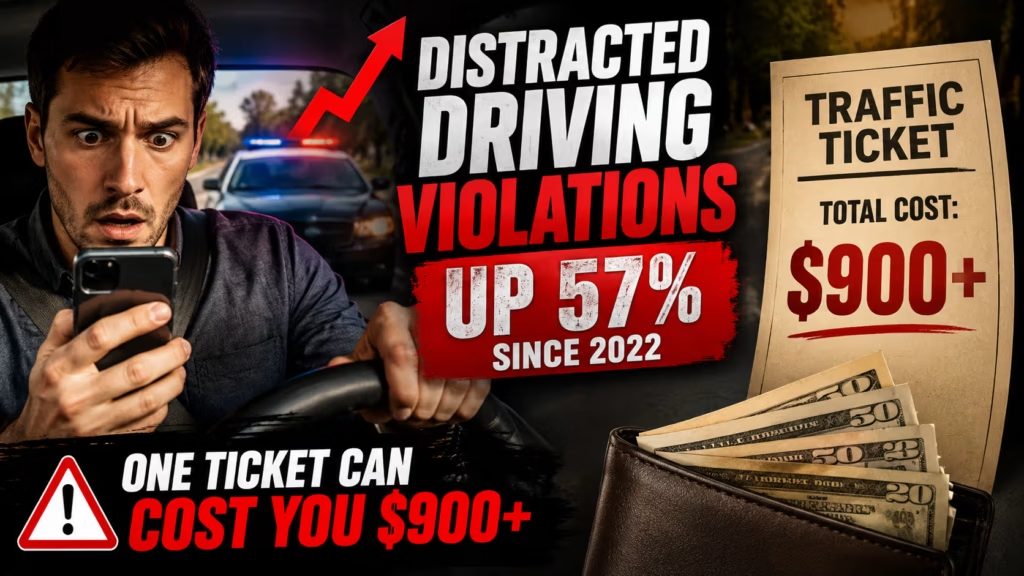
You’ve seen it on the highway: drivers texting, scrolling, even watching videos behind the wheel. But the numbers behind this behavior are staggering — and they’re hitting your wallet harder than ever. Distracted driving violations have surged 57% since 2022, according to the 2026 LexisNexis U.S. Auto Insurance Trends Report. And it’s not just young drivers getting caught.
Quick Answer: A single distracted driving ticket raises car insurance premiums by an average of 19-28% nationwide in 2026 — that’s $290 to $900 extra per year depending on your state and insurer. The worst-hit states see increases up to 51%. The sharpest violation spikes are among drivers aged 36-45 (up 70%+) and those 66+ (up 73%). Your best defense: shop quotes from at least 4 insurers (penalties vary wildly), complete a defensive driving course for 5-10% off, and enroll in telematics for up to 30% savings that can offset the surcharge entirely.
This is not a minor traffic issue. It is a national epidemic reshaping how insurers price risk — and millions of Americans are about to discover just how expensive one moment of distraction can become. Here is exactly what the data shows, what it means for your premium, and the exact steps to protect yourself.
📑 What You’ll Learn in This Guide:
- The Shocking 2026 Violation Numbers
- Exactly How Much One Ticket Costs You
- Premium Increases by State (Highest vs. Lowest)
- Surcharge Differences by Insurance Company
- Why Distracted Driving Claims Cost More
- 5 Proven Ways to Protect Your Rates
- What Insurers Are Doing About It
- Your 2026 Rate Protection Action Plan
- Frequently Asked Questions
The Shocking Numbers: Distracted Driving Violations Surge 57%
Comparing the first three quarters of 2025 to the same period in 2022, distracted driving violations increased by 57% while overall miles driven increased by only 2%. The key takeaway is unmistakable: this is not about more driving — it is about worse driving behavior.
These numbers shatter the stereotype that distracted driving is a “teen problem.” The sharpest increases are among drivers aged 36 to 45 and those 66 and older — groups with the most established driving records and, often, the most to lose from a premium spike. Why the surge? Remote work blurred the boundaries between personal and professional communication, smartphones became more addictive, and enforcement technology (AI-powered cameras, phone-detecting sensors) became far more effective at catching violations that previously went unnoticed.
Exactly How Much One Distracted Driving Ticket Costs You
When you get a distracted driving ticket, your insurer does not just add a flat fee. They recalculate your entire risk profile. The result is a percentage-based surcharge that compounds with your base premium. Here is what the data shows for 2026:
The financial pain goes beyond the ticket fine. A $200 ticket can easily become a $1,500-$2,700 total cost when you factor in 3-5 years of elevated premiums. And if you live in a high-penalty state, that number climbs even higher.
Premium Increases by State: Where One Ticket Hurts Most
Not all states punish distracted driving equally. Some have laws that limit how insurers can use these violations, while others allow aggressive surcharging. Here are the states where a single ticket will cost you the most — and the least:
States With the Highest Premium Increases
States With the Lowest Premium Increases
How Different Insurance Companies Penalize Distracted Driving
This is where shopping around becomes a financial superpower. The same ticket can trigger wildly different surcharges depending on which company insures you:
The key insight: If you have Progressive and get a distracted driving ticket, your premium could jump 31%. If you have GEICO, the same ticket might only raise it 12%. That difference on a $2,000 annual policy is $380 per year — or $1,140-$1,900 over the 3-5 year surcharge period. This is why comparing quotes after any violation is not optional; it is essential.
Why Distracted Driving Claims Cost Insurers — and You — More
Distracted driving is not just about tickets. It is about severity. When a driver is texting or scrolling, their reaction time drops dramatically. The result is not more fender-benders — it is more high-speed, high-impact collisions with serious injuries.
Bodily injury (BI) claims now account for more than 26% of total claims dollars, up from less than 20% in 2022. As BI frequency and severity continue to rise, insurers are paying out billions more — and passing those costs directly to policyholders through base rate increases, even for drivers with clean records.
📈 The Cost Cascade
- More violations = more accidents
- More accidents = higher claims payouts
- Higher payouts = insurers raise base rates for everyone
- Your clean record still costs more at renewal
🛡️ How to Break the Chain
- Shop aggressively — rates vary $500+ between carriers
- Use telematics — prove you’re low-risk with data
- Bundle policies — homeowners + auto = 10-25% off
- Raise your deductible — lower premium, same coverage
Nine people are killed every day in the United States due to distracted driving accidents — approximately 3,500 people per year. The annual economic impact of distracted driving accidents and deaths is estimated at $40 billion. Insurers are responding by treating these violations with the same severity as DUIs in some pricing models.
5 Proven Ways to Protect Your Insurance Rates
If you have a clean record, keep it that way. If you already have a ticket, act immediately. Here are the five most effective strategies:
1. Shop Quotes From at Least 4 Insurers
Not all insurers penalize violations equally. One provider may increase your premium by 31% for a distracted driving ticket; another may barely change it. The difference can be $400-$700 per year. Get quotes from Progressive, GEICO, State Farm, Allstate, and at least one regional carrier. Online comparison tools make this a 10-minute task that can save you thousands.
2. Complete a Defensive Driving Course
Many insurers offer a 5-10% discount for completing an approved defensive driving course. In some states, completing the course can also reduce or remove points from your driving record, which helps keep your license clean and your premiums lower. The course typically costs $25-$50 and takes 4-6 hours online — a small investment for ongoing savings.
3. Enroll in Telematics (Usage-Based Insurance)
Programs like Progressive Snapshot, GEICO DriveEasy, State Farm Drive Safe & Save, and Allstate Drivewise track your actual driving behavior through a smartphone app or plug-in device. Safe drivers earn discounts of 10-30%, which can completely offset a distracted driving surcharge. Even better: telematics data proves you are low-risk, giving insurers objective evidence to price you favorably.
4. Ask About Accident/Violation Forgiveness
If this is your first distracted driving ticket and you have been with your insurer for several years, ask about violation forgiveness programs. Some insurers (notably Allstate and Progressive) offer first-ticket forgiveness as an add-on or loyalty benefit. This can prevent the surcharge from ever appearing on your policy.
5. Keep Your Record Clean Going Forward
One ticket is expensive. Two tickets can be catastrophic. Set your phone to Do Not Disturb while driving. Use hands-free technology only when necessary. Consider apps like LifeSaver or DriveMode that block notifications when your vehicle is in motion. Every additional violation compounds the financial damage and can push you into a high-risk classification where affordable coverage becomes difficult to find.
Get Your 2026 Car Insurance Quotes
Lock in the lowest rates before your next renewal. Compare quotes from top insurers and see how much you could save — even with a violation on your record.
Get My Free Quotes NowWhat Insurance Companies Are Doing About the Distracted Driving Epidemic
Insurers are not sitting idle. They are responding to the 57% surge in violations with aggressive new strategies that affect every policyholder:
Your 2026 Rate Protection Action Plan
Do not wait for your renewal notice to shock you. Take these three steps this week:
- Audit your driving record. Request your Motor Vehicle Report (MVR) from your state’s DMV. Know exactly what insurers see when they pull your history. In most states, you can get this online for $5-$15.
- Get 4+ quotes immediately. If you have any violation in the last 3 years, you are likely overpaying. The variance between carriers for high-risk profiles is wider than ever — often exceeding $600 per year. Use online comparison tools or work with an independent agent.
- Stack your discounts. Combine telematics enrollment + defensive driving course + multi-policy bundling + higher deductible. These four moves together can reduce your premium by 25-40%, easily absorbing any violation surcharge and then some.
Frequently Asked Questions About Distracted Driving and Insurance
How much does a distracted driving ticket increase insurance rates in 2026?
A distracted driving ticket increases car insurance premiums by an average of 19-28% nationwide, translating to $290-$900 extra per year depending on your state and insurer. Progressive surcharges the most at 31%, while GEICO and State Farm average 12-13%. In high-penalty states like California, increases can reach 51%. The surcharge typically stays on your policy for 3-5 years.
Which age groups have the highest distracted driving violation increases?
Contrary to popular belief, the sharpest increases are among drivers aged 36-45 (up 70%+) and those 66 and older (up 73%). These groups saw the largest spikes since 2022, while overall miles driven only increased 2%. Remote work, increased smartphone dependency, and more effective enforcement technology are driving the surge across all age groups.
How can I lower my insurance rates after a distracted driving ticket?
Five proven strategies: 1) Shop around — not all insurers penalize violations equally. 2) Complete an approved defensive driving course for a 5-10% discount. 3) Enroll in telematics (Progressive Snapshot, GEICO DriveEasy) for up to 30% off. 4) Ask about violation forgiveness for first-time offenses. 5) Consider raising your deductible to lower monthly premiums.
Which states have the highest insurance penalties for distracted driving?
The highest increases are in California (51%), New Jersey (44%), Vermont (44%), Rhode Island (42%), and North Carolina (39%). The lowest are New York (9%), Wyoming (12%), Hawaii (14%), and Pennsylvania (15%). Some states limit how insurers can use these violations, so always check your local regulations.
How long does a distracted driving ticket stay on my insurance record?
Typically 3 to 5 years, depending on your state and insurer. During this period, you pay elevated premiums. Rates gradually decrease as time passes without additional violations. In some states, completing a defensive driving course can reduce or remove points from your record sooner.
Does my insurance go up if someone else in my household gets a distracted driving ticket?
Generally no — insurance follows the driver, not the household. However, if the ticketed driver is listed on your policy (spouse, child, etc.), your household premium will likely increase because insurers rate policies based on all listed drivers. If they are not on your policy, your rates should not be affected.
Will a distracted driving ticket affect my ability to get insurance?
A single ticket will not prevent you from getting insurance, but multiple violations within 3 years can push you into the non-standard or high-risk market, where premiums are significantly higher and carrier options are limited. Some insurers may refuse to write new policies for drivers with multiple recent violations.
One Ticket Should Not Define Your Rates for Years
The 57% surge in distracted driving violations is real, the financial consequences are severe, and the data shows no signs of reversing. But you are not powerless. A single ticket does not have to cost you $1,000+ over three years — if you act strategically.
Shop quotes. Stack discounts. Use telematics to prove you are low-risk. Complete defensive driving. And most importantly, keep your record clean going forward. The drivers who treat this epidemic as a wake-up call and take proactive steps will pay less than those who simply auto-renew and hope for the best.
The choice is simple: spend 20 minutes comparing quotes and enrolling in discount programs now, or spend the next 3-5 years overpaying by hundreds of dollars per year. The math is not close.
Sources: PropertyCasualty360 — Distracted Driving Violations Up 57%, InsuranceNewsNet — 2026 Traffic Law Changes, AutoInsurance.com — 2026 Pricing Trends, AAA — Texting While Driving Insurance Costs, Davidson Insurance — Distracted Driving Rate Impact, CoreMark Insurance — Texting Ticket Premium Impact, Progressive — Distracted Driving FAQ, FOX 5 NY — NY 2026 Point System Changes, Insurance Information Institute (III), National Highway Traffic Safety Administration (NHTSA).