
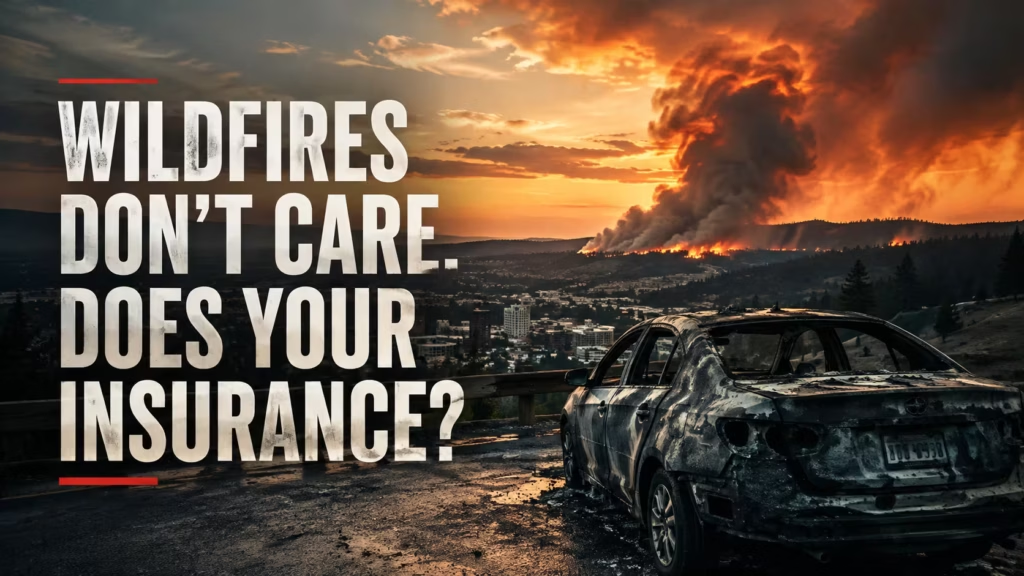
On the afternoon of August 1, 2026, Spokane residents watched a wall of flames crawl across the Spokane River and into city neighborhoods. Driven by wind gusts of 35 to 45 mph and a record-setting statewide drought, the Old Trails Fire, Fairview Fire, and Autumn Lane Fire — collectively dubbed the Spokane Complex Fire — scorched more than 7,700 acres, destroyed at least 600 homes and structures, and forced roughly 60,000 people to evacuate with Level 3 “Go Now” orders. Washington Governor Bob Ferguson declared a statewide emergency. The National Weather Service issued its first-ever “Particularly Dangerous Situation” Red Flag Warning for Eastern Washington. Spokane Mayor Lisa Brown called it the worst natural disaster in the city’s modern history.
Key Takeaway: Car insurance covers wildfire damage only if you carry comprehensive coverage. Liability and collision policies pay nothing for fire, smoke, or ash damage to your own vehicle. Washington’s new ESB 5721 law, effective January 1, 2026, guarantees your right to an independent appraisal if you dispute your insurer’s payout. After Spokane’s devastating fires, drivers with comprehensive coverage can file claims for total loss, smoke damage, and debris impact — but you cannot add coverage once a wildfire is imminent.
In the aftermath, one question dominates every affected driveway and parking lot: Does my car insurance cover this? The answer is unforgiving. If you carry comprehensive coverage, your policy will likely pay for the damage or total loss, minus your deductible, up to the vehicle’s actual cash value. If you carry only liability — or even liability plus collision — you are almost certainly out of pocket. This guide explains exactly how wildfire coverage works, what Washington State law requires, how to file a claim under extreme disaster conditions, and why ESB 5721 gives you new leverage against lowball settlements.
Navigate This Guide:
- What Happened in Spokane: The 2026 Wildfire Disaster
- Does Car Insurance Cover Wildfire Damage?
- Comprehensive vs. Collision: What’s the Difference?
- What Does Comprehensive Coverage Actually Cover in a Wildfire?
- What If You Don’t Have Comprehensive Coverage?
- How to File a Wildfire Insurance Claim in Washington State
- Washington’s New 2026 Appraisal Law: ESB 5721 Explained
- How Much Does Comprehensive Coverage Cost?
- What Washington Drivers Should Do Right Now
- Frequently Asked Questions
What Happened in Spokane: The 2026 Wildfire Disaster
The Spokane Complex Fire did not start as a single blaze. Three separate fires ignited on Saturday, August 1, 2026, and merged into a metropolitan catastrophe. By Sunday morning, the Old Trails Fire had burned over 3,500 acres near Riverside State Park, jumped the Spokane River, and torched neighborhoods along North Indian Trail Road and West Strong Road. The Fairview Fire added another 981 acres in the Peone Prairie area. A third fire, Autumn Lane, compounded the crisis on the city’s perimeter.
Across Three Fires
Destroyed
Evacuated
Without Power
First 24 Hours
Members Activated
Governor Ferguson activated the Washington National Guard and issued a statewide burn ban through September 30. Avista Utilities cut power to roughly 40,000 customers as a public safety shutoff. The Spokane Convention Center became an emergency shelter. Fire officials warned that conditions remained dangerous for 24 to 36 hours after the initial evacuation orders. For thousands of families, the question of vehicle coverage became urgent as they stood in shelter parking lots, unable to return home, uncertain whether their cars had survived.
Does Car Insurance Cover Wildfire Damage?
Yes — but only under comprehensive coverage. This is not a gray area. The Washington State Office of the Insurance Commissioner states explicitly: “Wildfire damage to your vehicle is not covered by liability or collision coverage on an auto policy. You must have comprehensive coverage for your vehicle to be protected from a wildfire loss.”
Comprehensive coverage is the portion of your auto policy that pays for damage caused by events other than collisions. Insurers sometimes call this “other than collision” coverage. It covers fire, theft, vandalism, falling objects, hail, flooding, and natural disasters. In practice, if a wildfire burns your car while it is parked in your driveway, sitting in an office parking garage, or stranded on an evacuation route, comprehensive coverage is the only policy component that responds.
Here is where many drivers misunderstand their own policies. Washington State requires only 25/50/10 liability coverage — that is, $25,000 per person in bodily injury, $50,000 per accident, and $10,000 in property damage. A large percentage of Washington drivers carry exactly that minimum, or add collision coverage to protect against at-fault accidents, but skip comprehensive to save money. In Spokane’s fire zones, those drivers are now discovering that their policies are worthless against wildfire loss.
Comprehensive vs. Collision: What’s the Difference?
During claim reviews, adjusters separate fire damage into two categories based on cause. The distinction determines which coverage pays — and whether you are covered at all.
Comprehensive Coverage
- Covers: Wildfire, smoke, ash, falling debris, tree branches, arson, lightning, hail, flooding, theft, vandalism, animal strikes
- Does NOT cover: Damage from hitting another vehicle or object
- Applies when: Fire damages your car while parked, evacuated, or otherwise not in a collision
- Deductible: Typically $250 to $1,000
- Required by law? No, but lenders require it for financed vehicles
Collision Coverage
- Covers: Damage from hitting another vehicle, a guardrail, a tree, or rolling over
- Does NOT cover: Wildfire, theft, vandalism, or weather damage
- Applies when: A crash causes fire — e.g., a fuel tank rupture in an accident
- Deductible: Typically $500 to $1,000
- Required by law? No, but lenders require it for financed vehicles
In practice, the only scenario where collision covers fire is when the fire is a direct result of a crash. If you strike another vehicle, rupture a fuel line, and your car ignites, that is a collision claim. If embers from the Old Trails Fire drift onto your parked SUV and melt the interior, that is a comprehensive claim. The distinction matters because drivers who dropped comprehensive to save $20 per month are now facing total losses worth $15,000 to $40,000 with zero reimbursement.
What Does Comprehensive Coverage Actually Cover in a Wildfire?
A very common scenario after Spokane’s evacuation: a driver returns to find their vehicle not engulfed, but coated in thick ash and smoke residue. They assume the damage is minor. In reality, smoke and ash can corrode electrical systems, contaminate HVAC units, and permanently stain interior surfaces. Comprehensive coverage handles all of it.
Importantly, your comprehensive coverage remains in force even if you followed mandatory evacuation orders and left your vehicle behind. The Washington State Office of the Insurance Commissioner clarifies: “If you have comprehensive coverage for your vehicle, it’s still protected by your policy even if you leave it during a mandatory evacuation. It will cover your vehicle if it’s damaged by heat, smoke, ash, or by emergency responders fighting the fire.” You do not forfeit coverage by complying with evacuation orders.
What If You Don’t Have Comprehensive Coverage?
This is the hard truth many Spokane drivers are facing. If your car burned and you carry only Washington’s minimum liability coverage — or liability plus collision — your auto policy pays nothing for your vehicle. Liability coverage exists solely to protect other people from damage you cause. It does not repair or replace your car under any circumstances.
Your remaining options are limited and mostly inadequate:
- FEMA Individual Assistance: If the federal government declares a major disaster declaration for Spokane County, FEMA may provide limited financial assistance for vehicle replacement. However, FEMA typically caps vehicle assistance at a few thousand dollars and requires that you lack insurance coverage for the loss. It is not a substitute for comprehensive insurance.
- Small Business Administration (SBA) Loans: If you qualify, SBA disaster loans can help replace a vehicle, but they are loans — not grants — and must be repaid with interest.
- Personal Savings or Financing: Without insurance, you absorb the full replacement cost yourself. For a family that just lost their home, this is often impossible.
Washington Insurance Commissioner Patty Kuderer has made wildfire preparedness a centerpiece of her 2026 agenda, including legislation to require insurers to disclose wildfire risk scores and expand mitigation grants. Her office emphasizes that drivers in fire-prone regions should treat comprehensive coverage as essential, not optional. In practice, the cost of comprehensive coverage over five years is typically less than 10% of the value of a totaled vehicle.
Get Your 2026 Car Insurance Quotes
Compare Washington auto insurance rates from top U.S. carriers. Add comprehensive coverage before the next fire season.
GET YOUR 2026 CAR INSURANCE QUOTESHow to File a Wildfire Insurance Claim in Washington State
Filing a claim after a wildfire is not like filing after a fender bender. Access is restricted, evidence is fragile, and emotions run high. Follow this process to protect your rights and maximize your settlement.
Step 1: Wait for Official Clearance
Do not enter burned or evacuated zones until fire officials declare them safe. Entering prematurely risks your life and can compromise your claim if you disturb the scene. Once cleared, approach your vehicle with caution — structural integrity may be compromised, and toxic ash is hazardous.
Step 2: Contact Your Insurance Company Immediately
Call your insurer’s claims line as soon as possible. Washington law requires insurers to acknowledge first-party claims within 10 working days of receipt. Request your claim number, the assigned adjuster’s direct contact, and written confirmation of your comprehensive coverage limits and deductible amount. If you cannot reach your insurer due to high call volume, document your attempt with a timestamped screenshot or phone log.
Step 3: Document Everything Before Moving the Vehicle
Photograph and video your vehicle from every angle before anything is touched or towed. Capture:
- Wide shots showing the vehicle’s location relative to burned structures
- Close-ups of fire, smoke, and debris damage to paint, glass, tires, and interior
- Odometer reading and VIN plate
- Any aftermarket equipment, custom parts, or personal property inside
Upload these files to cloud storage immediately. Do not rely solely on your phone’s local memory.
Step 4: Keep Receipts and Track Every Conversation
Save receipts for evacuation expenses, temporary transportation, lodging, and emergency supplies. While auto insurance does not typically cover evacuation costs, these records establish your timeline and diligence. More importantly, log every interaction with your insurer — date, time, representative name, and summary. Washington insurers must accept or deny fully documented claims within 15 working days of receiving completed proof of loss. If they need more time, they must notify you in writing with a reason for the delay.
Step 5: Review the Settlement Carefully Before Signing
When the adjuster presents a settlement, verify how they calculated the actual cash value. Insurers use valuation software like CCC ONE or Mitchell to determine ACV, but these estimates can undervalue your vehicle. Compare their offer against private-party sale listings for identical vehicles in your region. If the numbers do not align, you have the right to challenge the valuation — and under Washington’s new ESB 5721, you have a powerful tool to do so.
Washington’s New 2026 Appraisal Law: ESB 5721 Explained
Effective January 1, 2026, every automobile insurance policy issued or renewed in Washington State must include a standardized right to an appraisal clause. This law, Engrossed Senate Bill 5721 (ESB 5721), fundamentally changes how disputes over vehicle value are resolved.
Here is how it works in practice. If your insurer declares your fire-damaged vehicle a total loss and offers an ACV settlement you believe is too low, either you or the insurer can demand an appraisal. The demand can be made 10 days after the insurer receives notification of the claim. Each party then selects a competent, disinterested appraiser. If those two appraisers cannot agree on the loss amount, they submit their differences to a neutral umpire. The umpire is either chosen by mutual agreement or appointed by the Washington Insurance Commissioner from a state-registered pool.
The umpire’s decision is binding on both parties. No more months of back-and-forth negotiations. No more hiring expensive attorneys for sub-$20,000 disputes. The process is designed specifically to resolve the type of valuation disagreements that spike after widespread disasters, when insurers deploy AI-powered photo estimating tools that routinely undervalue damage by 50% to 75%.
There is one caveat. Under the original Senate version, insurers would have been required to reimburse your appraisal costs if the final award exceeded their initial offer by $500 or more. The House removed that provision, so each side bears its own costs regardless of outcome. Even so, for a driver facing a $5,000 to $10,000 undervaluation on a totaled vehicle, the appraisal process is far cheaper and faster than litigation.
How Much Does Comprehensive Coverage Cost in Washington?
Comprehensive coverage is not free, but it is far less expensive than most drivers assume — and dramatically cheaper than replacing a vehicle out of pocket.
According to 2026 market data, full coverage car insurance in Washington State averages between $1,798 and $2,360 per year, depending on the driver profile, coverage limits, and data source. That figure includes liability, collision, and comprehensive coverage with typical $1,000 deductibles. Comprehensive coverage alone usually represents roughly 15% to 20% of the total premium.
of Comprehensive Alone
Premium Addition
Replacement Cost
as % of Vehicle Value
For a vehicle worth $25,000, paying roughly $150 per year for comprehensive coverage equals 0.6% of the vehicle’s value. That is a remarkably low cost for protection against total loss. In contrast, financing a replacement vehicle after a wildfire — especially if you still owe money on the burned car — can saddle you with two simultaneous loan payments. This is why lenders require comprehensive coverage on financed vehicles. They understand the math. Owner-operators who drop comprehensive after paying off a loan often fail to recalculate the risk.
Your actual comprehensive premium depends on your ZIP code, vehicle age, credit-based insurance score, driving history, and chosen deductible. In Spokane County, where wildfire risk has increased measurably, some insurers now apply separate wildfire deductibles or adjust comprehensive pricing based on proximity to the wildland-urban interface. Review your declarations page carefully for any wildfire-specific deductible that differs from your standard comprehensive deductible.
What Washington Drivers Should Do Right Now
The Spokane Complex Fire is a wake-up call for every driver in Eastern Washington — and every resident of fire-prone states. Wildfire season is no longer a rural problem. It is an urban reality. Here is the action plan insurance professionals recommend:
- Check your policy today. Log into your insurer’s portal or call your agent. Confirm whether you have comprehensive coverage. If you do not, request a quote to add it. Do not wait for the next red flag warning.
- Verify your deductible. Choose a deductible you can afford in a disaster. A $1,000 deductible lowers your premium but requires immediate cash after a loss. If you lack emergency savings, consider a $500 deductible even if the monthly cost is slightly higher.
- Document your vehicle’s current condition. Take dated photos of your car’s exterior, interior, odometer, and VIN. List aftermarket modifications, custom stereos, or equipment. Store this inventory in cloud storage. If your car burns, this evidence supports your ACV claim.
- Understand your rights under ESB 5721. If you dispute your insurer’s valuation, invoke your right to an independent appraisal. Know that the 10-day clock starts after claim notification. Do not accept a lowball offer out of desperation.
- Review your insurer’s financial strength. After a catastrophic event, weaker carriers may delay claims or dispute payouts aggressively. Check A.M. Best ratings. If your carrier is marginal, consider switching to a top-tier insurer before the next disaster.
Frequently Asked Questions About Car Insurance and Wildfire Damage
Does car insurance cover wildfire damage in Washington State?
Yes, but only if you carry comprehensive coverage. Liability and collision policies do not cover wildfire damage to your vehicle. Comprehensive coverage pays for fire, smoke, ash, and falling debris damage, as well as total loss, up to the actual cash value minus your deductible.
What is comprehensive coverage and how does it protect against wildfires?
Comprehensive coverage is an optional auto insurance policy component that covers non-collision damage, including wildfires, theft, vandalism, falling objects, and natural disasters. In Washington State, the Office of the Insurance Commissioner confirms that wildfire damage falls under comprehensive coverage, not collision or liability.
Does my car insurance still cover my vehicle if I evacuate during a wildfire?
Yes. If you have comprehensive coverage, your vehicle remains protected even if you leave it during a mandatory evacuation. The Washington State Office of the Insurance Commissioner explicitly states that comprehensive coverage protects your vehicle if it is damaged by heat, smoke, ash, or emergency responders fighting the fire while you are evacuated.
How do I file a wildfire car insurance claim in Washington State?
First, wait for official clearance from fire officials before approaching your vehicle. Then contact your insurance company immediately to initiate the claim. Document all damage with photos and videos, keep receipts for any evacuation-related expenses, and track every conversation. Washington law requires insurers to acknowledge first-party claims within 10 working days and accept or deny within 15 working days of receiving completed proof of loss.
What is Washington’s ESB 5721 appraisal law and how does it help drivers?
Effective January 1, 2026, ESB 5721 requires every Washington auto insurance policy to include a right to an independent appraisal if you and your insurer disagree on the actual cash value or amount of loss. Either party can demand an appraisal 10 days after claim notification. Both sides select a neutral appraiser; if they disagree, a registered umpire appointed by the Insurance Commissioner breaks the tie. The result is binding.
How much does comprehensive coverage cost in Washington State?
In Washington State, full coverage car insurance (including comprehensive and collision with $1,000 deductibles) averages between $1,798 and $2,360 annually depending on the data source and driver profile. Comprehensive coverage alone typically adds $150 to $300 per year to a policy. For a vehicle worth $10,000, this breaks down to roughly $15 to $25 per month — a small price for protection against total wildfire loss.
What happens if I only have liability coverage and my car burns in a wildfire?
If you carry only liability coverage and your vehicle is destroyed by a wildfire, your insurance company will pay nothing for your vehicle. Liability coverage only pays for damage or injuries you cause to others. Without comprehensive coverage, you bear the entire financial loss out of pocket.
Is smoke damage from a wildfire covered by car insurance?
Yes, smoke and ash damage is covered under comprehensive coverage. This includes contamination of upholstery, corrosion of electrical systems, damage to HVAC components, and interior staining. You should file a comprehensive claim even if the flames never physically touched your vehicle.
Can I add comprehensive coverage after a wildfire starts?
No. Insurers suspend new coverage additions and policy changes in areas under active wildfire threat, evacuation orders, or red flag warnings. You must add comprehensive coverage before disaster strikes. Once a fire is imminent, it is too late to obtain protection.
How is my payout calculated if my car is totaled by fire?
Your insurer pays the actual cash value (ACV) of your vehicle immediately before the fire, minus your comprehensive deductible. ACV is based on market comparables, mileage, condition, and equipment — not what you owe on a loan or what you originally paid. If you disagree with the ACV, Washington’s ESB 5721 gives you the right to an independent appraisal.
The bottom line is unambiguous. Spokane’s 2026 wildfires destroyed hundreds of vehicles along with hundreds of homes. Drivers who carried comprehensive coverage will recover their losses, minus deductible, through the claims process. Drivers who carried only liability or collision coverage will recover nothing from their auto policy. The difference between those two outcomes was a decision made months or years ago — often to save $15 or $20 per month.
Washington’s new ESB 5721 appraisal law gives comprehensive policyholders additional leverage against lowball settlements, but it cannot help drivers who lack the coverage entirely. If you live in Washington, Oregon, Idaho, California, or any state where wildfire risk is escalating, review your policy this week. Add comprehensive coverage if it is missing. Document your vehicle. Know your deductible. And hope you never need to use it — but be prepared if you do.
Use our free estimate tool below. Enter your Washington ZIP code and compare comprehensive coverage rates from top insurers. No email or phone required.
Sources: Washington State Office of the Insurance Commissioner, ABC News, NPR, The New York Times, The Washington Post, The Spokesman-Review, KIRO Newsradio / MyNorthwest, Repairer Driven News, NerdWallet, Insurance Information Institute (Triple-I), National Association of Insurance Commissioners (NAIC).