
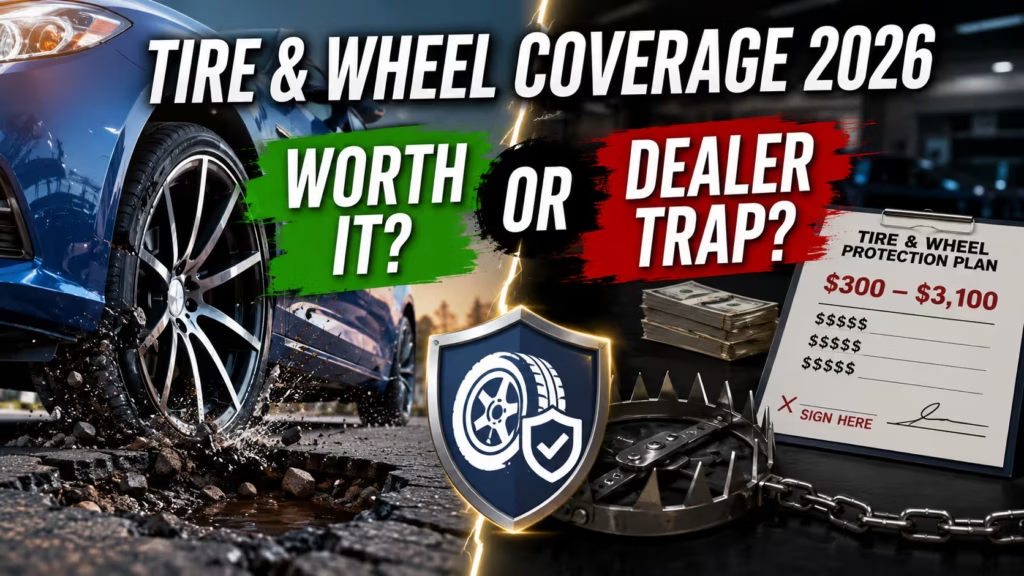
One pothole. One nail. One curb scrape. In 2026, that single moment can cost you $400 to $1,600 — and your standard car insurance won’t touch it. Tire and wheel coverage, also called road hazard protection, is the add-on every dealer pushes at the finance desk. But here’s the truth most salespeople won’t say: for some drivers, it’s a financial lifesaver. For others, it’s pure profit padding for the dealership.
Quick Answer: Tire and wheel coverage is worth it in 2026 if you drive on pothole-ridden roads, own a vehicle with low-profile or run-flat tires (costing $200-$400 each), have expensive alloy wheels, or lease a luxury car where damaged rims trigger end-of-lease penalties. It is NOT worth it if you drive on well-maintained highways, have standard tires and steel wheels, or can self-insure with a $500 emergency fund. The average driver with a standard sedan on good roads will lose money on dealer-priced coverage. The smartest move: get a third-party quote before saying yes or no at the dealership.
This guide breaks down exactly what tire and wheel coverage covers, what it costs in 2026, when it pays for itself with real math, and the cheaper alternatives most dealers hope you never discover. By the end, you’ll know with certainty whether to sign the dotted line or walk away.
📑 Navigate This Guide:
- What Does Tire and Wheel Coverage Actually Cover?
- The Real Cost of Tire and Wheel Damage in 2026
- How Much Does Coverage Cost? (Dealer vs. Third-Party)
- When It’s Worth It — And When It’s a Trap
- Why Your Car Insurance Won’t Save You
- Cheaper Alternatives the Dealer Won’t Mention
- The 3-Step Decision Framework
- Frequently Asked Questions
What Does Tire and Wheel Coverage Actually Cover?
Not all tire and wheel plans are created equal. Before you evaluate cost, you need to know exactly what you’re buying. Here’s the breakdown of what most plans include — and the critical exclusions that leave drivers frustrated.
The Real Cost of Tire and Wheel Damage in 2026
To decide if coverage is worth it, you need to know what you’re protecting against. Here are the actual replacement and repair costs American drivers are facing right now.
💰 2026 Tire & Wheel Replacement Costs (National Averages)
The pothole problem is getting worse. In Rhode Island alone, the state received 506 pothole damage claims in the 2024 season, and 2026’s extreme temperature swings have created even more road hazards. A single incident in Providence cost one BMW M3 driver $1,000 — and the state’s maximum reimbursement is capped at just $300, a rate set in 1979. Most states offer even less or nothing at all.
How Much Does Tire and Wheel Coverage Cost? (Dealer vs. Third-Party)
This is where most buyers make their biggest mistake: they only hear the dealer’s price, rolled into their monthly payment, and never shop around. The price difference is staggering.
🏢 Dealer Tire & Wheel Coverage
- Standard vehicles: $300 – $500 one-time fee
- Luxury/performance cars: $1,500 – $3,100 for 5 years
- Term: 3-5 years, often mileage-capped
- Financed into loan: Yes — you pay interest on it
- Claims: Must use dealer-approved shops
- Transferable: Sometimes, for a fee
- Cancelable: Often pro-rated, but dealer makes it difficult
🛡️ Third-Party / Standalone Coverage
- Annual cost: $50 – $150 per year
- AAA members: Around $1,750 for 84 months (with dent repair included)
- Term: Flexible — 1 to 7 years
- Financed into loan: No — paid separately
- Claims: Use any authorized repair shop
- Transferable: Usually yes, often free
- Cancelable: Typically easy pro-rated refund
The dealer markup is real. One BMW M3 buyer was quoted $3,100 for 5 years at the dealership. An identical AAA plan with MORE coverage (including paintless dent repair and key replacement) cost $1,750 for 84 months — a savings of over $1,300. Another driver paid $2,000 for 5 years and still considered it worthwhile because he intended to “make sure I get a new full set of tires before it ends.”
When It’s Worth It — And When It’s a Dealer Trap
Here’s the decision framework that separates smart buyers from overpaying ones. Be honest about your situation.
Why Your Car Insurance Won’t Save You From Pothole Damage
This is the misunderstanding that costs drivers thousands. Your standard auto policy does NOT cover tire and wheel damage the way you think it does.
Pothole damage falls under collision coverage, not comprehensive. That matters for three reasons:
- 1. It’s an at-fault claim. Hitting a pothole is classified as a single-vehicle accident where you are at fault. Filing a collision claim can raise your premiums at renewal — sometimes by 10-30% for 3 years.
- 2. You pay your deductible first. With deductibles commonly set at $500, $1,000, or even $2,000, a $400 tire repair means you pay 100% out of pocket anyway. One Reddit user faced $4,000 in pothole damage with a $2,000 deductible — still leaving them $2,000 short.
- 3. Comprehensive doesn’t apply. Comprehensive covers theft, vandalism, fire, and animal strikes — NOT road hazards. So even drivers with “full coverage” are exposed to pothole costs unless they specifically carry collision AND the damage exceeds their deductible.
Government reimbursement? Don’t count on it. Rhode Island caps payouts at $300 (set in 1979). Pennsylvania’s DOT is required to deny most pothole claims by law. Massachusetts offers nothing for vehicle damage on state roads. Michigan requires proving the government knew about the pothole and failed to fix it — a bar so high that “the majority of claims are denied.”
Cheaper Alternatives the Dealer Won’t Mention
Before you sign at the finance desk, explore these options. They can save you 50-70% while providing similar protection.
The 3-Step Decision Framework (Takes 10 Minutes)
Don’t let a salesperson pressure you. Use this framework at the dealership or before you go.
Step 1: Calculate Your Real Replacement Costs
Look up the retail price of ONE of your tires and ONE of your wheels. Check Tire Rack, your manufacturer’s parts site, or call a local shop. Run-flats and 19″+ wheels are the danger zone. If a single tire costs $300+ or a wheel costs $500+, you’re in high-risk territory.
Step 2: Compare All Coverage Options
Get three numbers: (A) the dealer’s cash price (not monthly payment), (B) a third-party quote from AAA or an independent provider, and (C) the cost of retailer road hazard warranties if you’re buying new tires. If the dealer price is more than 30% higher than the best alternative, walk away.
Step 3: Check for Overlapping Coverage
Review your auto insurance collision deductible, credit card benefits, and any existing tire warranties. If your collision deductible is $1,000+ and you have no other coverage, tire and wheel protection becomes more valuable. If you already have road hazard coverage from your last tire purchase, don’t double-pay.
Get Your 2026 Car Insurance Quotes
Before you buy any add-on coverage, make sure your base auto insurance is optimized. Compare collision deductibles, comprehensive coverage, and total policy costs in one step — it affects everything else.
Get My Free Quotes NowFrequently Asked Questions About Tire and Wheel Coverage
Is tire and wheel coverage worth it in 2026?
It depends entirely on your vehicle and driving conditions. Worth it if: you have low-profile or run-flat tires ($200-$400 each), drive on poor roads with frequent potholes, own expensive alloy wheels, or lease a vehicle where wheel damage triggers penalties. Not worth it if: you have standard tires and steel wheels, drive mostly on highways, or can cover a $500 repair from savings. The average driver with a standard sedan on good roads will pay more in premiums than they save in claims.
What does tire and wheel coverage actually cover?
Most plans cover road hazard damage (potholes, nails, glass, debris), curb damage to rims, tire replacement when repair is impossible, wheel replacement for structurally damaged rims, and roadside assistance with towing up to $100. Exclusions include normal wear and tear, cosmetic-only damage, lack of maintenance, racing/off-roading, and damage covered by collision insurance. Always read the full exclusion list before purchasing.
How much does tire and wheel coverage cost in 2026?
Dealer plans range from $300-$500 for standard vehicles to $1,500-$3,100 for luxury cars with large wheels, typically for 3-5 years. Third-party plans from providers like AAA cost $50-$150 per year or approximately $1,750 for 84 months with additional benefits. The critical difference: dealer plans are financed into your auto loan with interest, while standalone plans are paid separately.
Does car insurance cover pothole tire damage?
Only if you carry collision coverage — and even then, it’s problematic. Pothole damage is classified as an at-fault collision claim, which can raise your premiums. You must also pay your deductible first ($500-$2,000), which often exceeds the repair cost for a single tire. Comprehensive coverage does NOT cover road hazards. This gap is exactly why tire and wheel protection exists as a separate product.
What are cheaper alternatives to dealer tire and wheel coverage?
The best alternatives are: (1) Tire retailer road hazard warranties ($15-$40 per tire from Discount Tire, Tire Rack), (2) Manufacturer tire warranties (sometimes included free), (3) Credit card purchase protection (90-120 days after purchase), (4) Third-party plans from AAA or independent providers (often 50% less than dealers), and (5) Self-insuring by setting aside $500 in an emergency fund. Always compare all five before buying at the dealership.
Can I cancel tire and wheel coverage after buying it?
Yes, in most cases. Dealer plans are typically cancelable with a pro-rated refund, though dealers often make the process deliberately difficult. Third-party plans usually offer easier cancellations. If you financed the coverage into your auto loan, canceling may reduce your monthly payment or shorten your loan term rather than providing a cash refund. Check your contract’s cancellation clause before signing.
Does tire and wheel coverage cover curb rash?
It depends on the plan. Most coverage applies to structural curb damage — bent rims, cracks, or air leaks. Purely cosmetic curb rash (scratches and scuffs that don’t affect function) is often excluded or only covered under premium plans. Some dealer “wheel protection” plans specifically cover cosmetic refinishing, but these cost significantly more. Always ask: “Does this cover cosmetic curb rash or only structural damage?”
Is tire and wheel coverage transferable if I sell my car?
Many plans are transferable, which can increase your resale value. Dealer plans sometimes charge a transfer fee ($50-$100). Third-party plans are more commonly transferable at no cost. Non-transferable plans lose all remaining value when you sell — another reason to favor standalone coverage over dealer add-ons. If transferability matters to you, verify it in writing before purchasing.
Make the Smart Choice — Not the Easy One
The finance office at a dealership is designed to make saying “yes” effortless and saying “no” uncomfortable. They roll the cost into your monthly payment so it feels like nothing. But $3,100 over 72 months at 6% interest is not nothing — it’s $3,456 you’ll never see again unless you file multiple claims.
The drivers who win in 2026 are the ones who do the math before they sign. They know their tire costs. They get third-party quotes. They understand that collision insurance won’t save them from a $400 pothole because the deductible eats the whole claim. And they recognize that for some vehicles — low-profile tires, luxury wheels, leased cars — this coverage genuinely pays for itself.
Take 10 minutes. Use the framework above. Get one third-party quote. Then decide with confidence, not pressure. Your wallet will thank you at the first pothole — or on every monthly payment if you wisely walked away.
Sources: Yelp Wheel & Rim Repair Cost Guide (2026), OEM Rim Shop 2026 Cost Guide, Performance Plus Tire Run-Flat Guide 2026, Rhode Island Current Pothole Damage Report (2026), Michigan Auto Law Pothole Claims Guide (2026), Progressive Insurance Pothole Coverage Guide, Capital One Auto Navigator Tire & Wheel Insurance Guide, Humberview Group Tire Protection Analysis (2026).