
Winter weather transforms familiar roads into deadly hazards. According to the National Highway Traffic Safety Administration (NHTSA), over 500,000 crashes occur annually on snowy, slushy, or icy pavements, resulting in roughly 100,000 injuries. Beyond the physical danger, these accidents trigger a massive wave of insurance claims—and subsequent rate hikes.
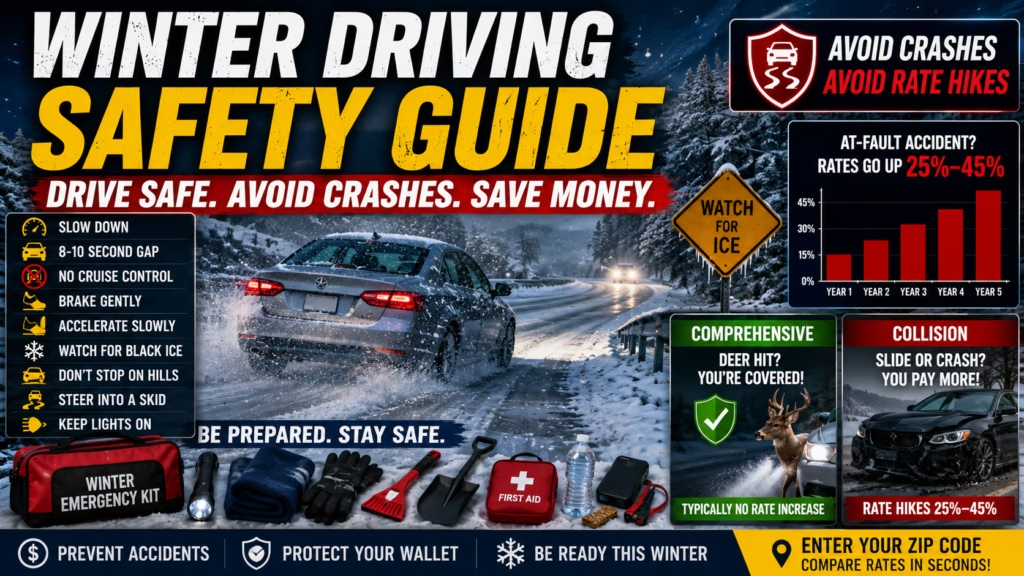
Quick Answer: To drive safely on winter roads, reduce your speed by 30-50%, increase your following distance to 8-10 seconds, and never use cruise control. If you do crash, an at-fault winter accident will raise your insurance rates by 25% to 45% for 3 to 5 years. However, hitting a deer or sliding into a ditch may be covered under “Comprehensive” insurance, which typically does not trigger a rate increase.
Most winter accidents are entirely preventable. This guide covers the exact driving techniques required for snow and black ice, how to prepare your vehicle, and the critical insurance rules you must know before the temperature drops.
The 9 Rules of Winter Driving (How to Avoid a Crash)
Speed limits are designed for dry, ideal conditions. When snow or ice is present, you must change your driving psychology. Follow these rules strictly:
- Slow Down Dramatically: Reduce your speed by 30% to 50% below the posted limit. Remember: physics doesn’t care about your schedule.
- The 8-Second Following Rule: On dry pavement, a 3-4 second gap is standard. On ice, you need an 8 to 10-second gap between you and the car in front of you to allow for safe braking.
- Never Use Cruise Control: If your tires hit a patch of ice while cruise control is engaged, the system can mistakenly detect wheel spin and accelerate to compensate, causing your car to violently skid out of control. Keep your feet on the pedals.
- Brake Gently and Early: If you have Anti-lock Brakes (ABS), press the pedal down firmly and hold it—you will feel a pulsing vibration, which is normal. Do not “pump” ABS brakes.
- Accelerate Slowly: Spinning your wheels melts the snow underneath them, turning it into a slick layer of ice. Apply the gas gently to maintain traction.
- Beware of “Black Ice”: Black ice is a nearly transparent layer of ice that blends in with the pavement. It almost always forms on bridges, overpasses, and shaded sections of the road. If the road looks “wet” but the temperature is below freezing, assume it’s black ice.
- Never Stop on a Hill: If you must drive uphill, gain momentum on the flat ground before the incline. Do not stop halfway up, as you may not be able to get moving again.
- Steer Into a Skid: If your rear wheels lose traction and the car starts to slide, take your foot off the gas immediately. Look exactly where you want the car to go, and steer gently in that direction. Do not slam on the brakes.
- Keep Your Lights On: Even during the day, turn on your headlights. Winter weather drastically reduces visibility, and your lights help other drivers see you.
The Essential Winter Emergency Kit
If you slide off the road into a snowbank, you could be waiting hours for a tow truck. Keep these items in your trunk from November through March:
- Traction aids: A small bag of non-clumping cat litter or sand to pour under your drive wheels.
- Tools: A sturdy ice scraper, a collapsible shovel, and jumper cables or a portable lithium jump starter.
- Warmth: A heavy wool blanket, extra gloves, and a beanie.
- Survival gear: A flashlight with extra batteries, a first-aid kit, non-perishable high-calorie snacks (protein bars), and water.
- Tech: A fully charged 10,000mAh power bank for your cell phone.
How Winter Crashes Affect Your Insurance Rates
This is where winter accidents get expensive. Insurers don’t care that it was snowing; they care about who is legally at fault.
- Sliding into another car: You are almost always deemed at-fault. Drivers are expected to operate their vehicles safely for the weather conditions. This will result in a Collision claim and a rate hike of 25% to 45%.
- Sliding off the road into a ditch/guardrail: Also considered at-fault. You will use your Collision coverage to fix your car, and your rates will go up.
- Hitting a deer: Deer strikes are prevalent in winter. This falls under your Comprehensive coverage (often called “other than collision”). Filing a comprehensive claim for an animal strike usually does NOT increase your insurance rates.
The “Weather Waiver” Myth: Many drivers believe insurers forgive accidents if the governor declares a “State of Emergency.” This is false. While some local police departments may waive responding to minor fender-benders during blizzards, your insurance company will still process the claim and assign fault normally.
Should You File a Claim for Minor Winter Damage?
If you slide into a curb at 10 mph and bend a wheel rim, the repair might cost $600. If your collision deductible is $500, the insurance company only pays $100—but they will mark you as an at-fault driver, raising your premium by $400 a year for the next 3 years.
The Rule of Thumb: If the repair cost is less than $1,500 to $2,000, pay for it out of pocket. Filing small claims is the fastest way to price yourself out of affordable insurance.
Frequently Asked Questions
Does my car insurance cover me if I slide on black ice?
Yes, your insurance will pay to fix your car (assuming you have collision coverage), but you will be considered at-fault. “Black ice was on the road” is not a valid legal defense to avoid an at-fault determination in the US.
What happens if someone else slides into my parked car?
Their liability insurance should pay for your damages. If they flee the scene (a hit-and-run), your own Uninsured Motorist Property Damage (UMPD) or Collision coverage will step in to fix your car, and your rates should not increase since you weren’t driving.
Do snow tires lower my car insurance?
Not directly. Most major insurers do not offer a specific discount for having snow tires. However, if snow tires prevent you from crashing, they indirectly save you thousands of dollars in deductibles and rate hikes.
Don’t Wait for the First Storm
The worst time to check your insurance policy is while you are stuck in a snowdrift. Make sure your collision deductible is an amount you can actually afford to pay, and verify you have rental car reimbursement so you aren’t paying out of pocket for a rental while your car is in the body shop. Enter your ZIP code below to instantly review your coverage options and ensure you are protected for the 2026 winter season.
Sources: National Highway Traffic Safety Administration (NHTSA) Winter Driving Statistics, Federal Highway Administration (FHWA), Insurance Information Institute (III) Claims Data.