
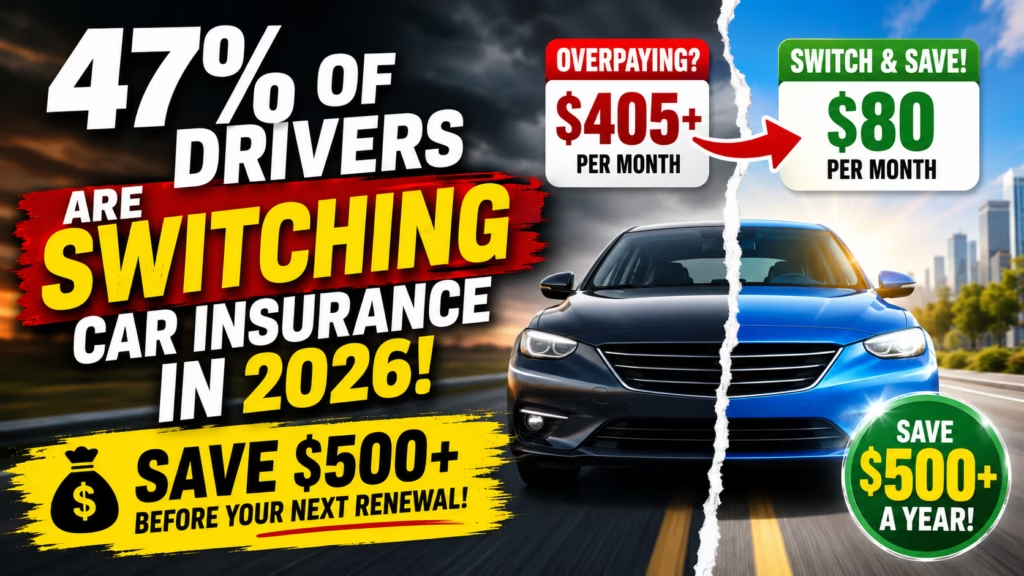
America is in the middle of a car insurance revolt. The 2026 LexisNexis U.S. Auto Insurance Trends Report just confirmed what millions of drivers already feel: over 47% of all active policies were shopped at least once in the last 12 months — a historic all-time high. That means nearly half of your neighbors, coworkers, and family members have already compared quotes and many have switched. The message is clear: loyalty is being punished, and shopping around is finally paying off.
Quick Answer: A record 47% of drivers shopped for car insurance in 2025-2026 because of lingering rate hikes, new competitive offers, and easy digital comparisons. The cost of not shopping can be enormous — the difference between the cheapest and most expensive insurer for the exact same coverage can exceed $500 per month. If you haven’t compared quotes in the last 6 months, you’re statistically overpaying right now.
This isn’t just a statistic. It’s a financial wake-up call. Insurers are finally competing again after years of double-digit rate increases. Some are slashing premiums to win back customers. Others are quietly raising rates on loyal policyholders, betting you won’t notice. The 47% who shopped are now paying less. The 53% who didn’t are footing the bill for everyone else.
In this 2026 guide, you’ll discover exactly why this shopping surge is happening, how much you stand to save by switching, the safest way to change insurers without a coverage gap, and the one tool that lets you see real-time quotes from 5+ top companies in under 30 seconds.
📑 Jump to Section:
- The Numbers Don’t Lie — 47% Is Just the Beginning
- Why Are So Many Drivers Finally Shopping Around?
- The Brutal Cost of Staying Loyal
- When Is the Best Time to Shop and Switch?
- How to Shop Effectively and Lock In Savings
- Special Section: Parents of Teen Drivers — This Is Critical
- How to Switch Without a Dangerous Coverage Gap
- Frequently Asked Questions
The Numbers Don’t Lie — 47% Is Just the Beginning
According to the 2026 LexisNexis U.S. Auto Insurance Trends Report, the quarterly shopping rate has shattered previous records. But that’s not the only data point that should make you sit up straight:
- 57% of customers actively sought new coverage in the past year, per J.D. Power’s 2026 U.S. Insurance Shopping Study.
- 48% of new auto insurance policies are now purchased entirely online — up from 36% just five years ago.
- 56% of consumers say insurance cost is now a key factor in deciding which vehicle to buy or lease.
- Online quote requests grew 22% year-over-year, with mobile traffic dominating.
This isn’t a temporary spike. It’s a permanent shift in consumer behavior. Drivers have learned that the old advice — “stick with your insurer for loyalty discounts” — is a myth that costs them real money every month.
Why Are So Many Drivers Finally Shopping Around?
Four powerful forces have converged in 2026 to create this perfect storm of insurance shopping:
Each of these forces alone would increase shopping. Together, they’ve triggered a once-in-a-decade opportunity for drivers willing to spend 10 minutes comparing quotes.
The Brutal Cost of Staying Loyal
Loyalty doesn’t pay. It costs you. According to The Zebra’s 2026 State of Auto Insurance report, there is a staggering 406% price difference between the cheapest and most expensive insurer for the exact same coverage in some markets. That’s not a typo. Two drivers with identical profiles, same ZIP code, same car, same coverage — one paying $80/month, the other $405/month.
Here’s what real drivers are saving by switching in 2026:
*Data from J.D. Power, The Zebra, and Quadrant Information Services 2026 projections. Individual results vary based on driver profile, location, and vehicle.
When Is the Best Time to Shop and Switch?
Timing matters. Shop at the wrong moment, and you might miss the biggest savings. Here’s the optimal shopping calendar for 2026:
- 30–60 days before your renewal date. This is the “sweet spot.” Insurers see you as a serious shopper and offer their best rates. Too early, and quotes may expire. Too late, and you risk a lapse.
- Immediately after a life change. Moved to a new ZIP code? Got married? Added a teen driver? Bought a new car? Any of these can reset your risk profile and unlock lower rates with a different insurer.
- When you see competitors advertising rate cuts. In 2026, several major insurers are publicly announcing reductions. If you hear about it, act — those new rates are for new customers first.
- Every 6 to 12 months, no matter what. Set a recurring calendar reminder. The market moves fast, and the best rate today may not be the best rate in October.
How to Shop Effectively and Lock In Savings
Don’t just randomly Google “cheap car insurance.” The 47% who succeed follow a specific, proven process:
- Have your current declarations page ready. Know your exact coverages, limits, and deductibles. You need apples-to-apples comparisons.
- Get quotes from at least 5 insurers. Include GEICO, Progressive, State Farm, Allstate, and USAA (if eligible). Regional insurers can also be goldmines — don’t ignore them.
- Ask about every available discount. Bundling, paid-in-full, paperless, safe driver, defensive driving course, good student, low mileage, vehicle safety features — the list is long. Insurers won’t always volunteer these.
- Use a ZIP code-based comparison tool. Enter your ZIP below to see real-time, personalized quotes from top insurers matched to your exact location. It’s the fastest way to reveal the true price spread in your area.
- Don’t sacrifice necessary coverage for price. Cheaper isn’t better if you’re underinsured. Aim for 100/300/100 liability, comprehensive, and collision with deductibles you can afford.
Special Section: Parents of Teen Drivers — This Is Critical
If you have a teen driver on your policy, the shopping wave matters even more. Teenagers can double or triple a family’s car insurance premium overnight. But here’s what most parents don’t realize: the price gap between insurers for teen drivers is even wider than for adults. Some companies specialize in young drivers and offer significantly lower rates. Others penalize them heavily. By not shopping, you could be burning $1,000 to $2,000 extra per year — per teen.
One of the most effective strategies is to run a fresh quote that includes your teen’s exact profile: age, gender, vehicle assignment, and grades (good student discounts can save 10%–25% alone). The insurers that were cheapest for you as a solo driver may be the most expensive once a teen is added. You won’t know until you compare.
Get Your Personalized Teen Car Insurance Quote
Enter your ZIP code below to get a highly accurate 2026 estimate based on your exact location, vehicle, and teen driver profile.
Get My ZIP Code Estimate NowHow to Switch Without a Dangerous Coverage Gap
The #1 fear that keeps people from switching is the nightmare of a coverage gap — a period where neither the old nor new policy is active. A single day without insurance can lead to fines, license suspension, and sky-high future premiums. But avoiding a gap is trivially easy if you follow these rules:
- Never cancel your old policy until the new one is fully active. Set the new policy start date for at least one day before the old one expires.
- Get written confirmation of the new policy’s effective date and coverage details before you cancel anything.
- If your renewal is weeks away, you can still switch mid-term. Your old insurer will refund the unused premium. Don’t feel trapped until renewal.
- Keep proof of new insurance in your car immediately. Many insurers offer digital ID cards the moment you purchase.
Frequently Asked Questions About Shopping for Car Insurance
Why are so many drivers switching car insurance in 2026?
Drivers are switching at record rates because of lingering high premiums from 2023-2024 rate hikes, increased price sensitivity, and a surge in competitive offers from insurers finally cutting rates. Digital tools have also made comparing quotes faster and easier than ever, removing the friction that used to keep people loyal to overpriced policies.
How much can I save by switching car insurance?
Industry data shows up to a 406% price difference between the cheapest and most expensive insurer for the same coverage. The average shopper saves around $47/month ($564/year), while high-premium drivers can save $500/month or more. Even if you’re happy with your current rate, a 10-minute comparison could reveal hidden savings.
When is the best time to shop for car insurance?
The ideal window is 30 to 60 days before your policy renews. You should also shop immediately after major life changes (moving, marriage, new car, adding a teen driver) and whenever you notice competitors advertising lower rates. Make it a habit to compare quotes every 6 to 12 months.
Does shopping for car insurance hurt my credit score?
No. Insurance quote inquiries are soft pulls that do not affect your credit score in any way. You can compare as many insurers as you like without worrying about credit damage. This is one of the few areas where frequent shopping carries zero penalty.
Is it risky to switch car insurance companies?
There is zero risk as long as you avoid a coverage gap. Always have your new policy start before or on the same day your old one ends. Never cancel your old coverage until the new policy is confirmed and active. With overlapping dates, you’re fully protected at all times.
What should I look for when comparing car insurance quotes?
Compare identical coverage limits and deductibles across all quotes. Look beyond the premium — check the insurer’s financial strength rating (A.M. Best), customer satisfaction scores (J.D. Power), and claims handling reputation. The cheapest policy is worthless if the company fights every claim.
Bottom line: The 47% shopping statistic isn’t just a number — it’s proof that millions of drivers are already saving hundreds or thousands of dollars by breaking the loyalty cycle. You can be next. Grab your current declarations page, enter your ZIP code below, and see exactly what top insurers are willing to offer you in 2026. It takes under a minute, costs nothing, and could be the most profitable decision you make this year.
Sources: LexisNexis U.S. Auto Insurance Trends Report 2026, J.D. Power 2026 U.S. Insurance Shopping Study, The Zebra State of Auto Insurance 2026, ValuePenguin Auto Insurance Analysis, Quadrant Information Services Rate Projections 2026.