You open your Pennsylvania renewal and see $1,800 for full coverage. That’s better than Florida or New York—but still a punch when you know someone in Lancaster pays $450 less for the exact same protection. Pennsylvania is a quiet battleground for car insurance, where one single decision you make at the kitchen table—choosing limited tort over full tort—can slash your premium by 20% before you even finish the paperwork. And a homegrown company most drivers outside the Keystone State have never heard of, Erie Insurance, often beats every national name on both price and claims satisfaction.
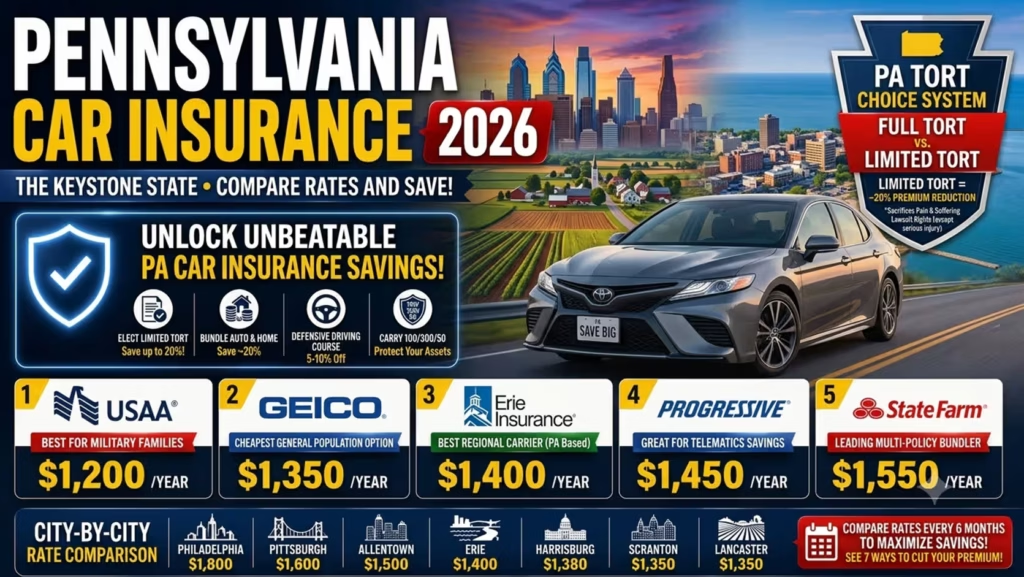
Quick Answer: The cheapest car insurance in Pennsylvania is USAA ($1,200/year) for military families, GEICO ($1,350/year) for the general public, and Erie Insurance ($1,400/year) as the best regional carrier. To lock in the lowest rate, choose limited tort (which saves 10–20%), carry at least 100/300/50 liability, and bundle your auto with a homeowners or renters policy. Pennsylvania’s minimum 15/30/5 liability limits are dangerously low, and the state’s unique choice no-fault system makes your tort election the single biggest pricing lever you control.
Here is exactly why Pennsylvania rates hover near the national average, which five companies dominate the cheapest tier in 2026, what you’ll actually pay in Philadelphia, Pittsburgh, and beyond, and the seven most powerful ways to drive your premium down—starting with the tort choice that most agents explain poorly.
Why Pennsylvania Car Insurance Stays Relatively Affordable
Pennsylvania’s average full-coverage premium runs around $1,700 a year, landing it near the national middle. That’s not an accident—it’s the product of a uniquely competitive market and a legal framework that rewards consumer choice.
- Choice no-fault system. Pennsylvania is one of only three “choice” states. You can elect full tort (unrestricted right to sue for pain and suffering) or limited tort (lower premiums but you give up that right except in serious injury cases). Because most drivers choose limited tort, the overall claims environment is less litigious, keeping base rates in check.
- Erie Insurance effect. Erie is headquartered in Erie, Pennsylvania, and its aggressive local pricing forces national carriers to stay competitive. In many ZIP codes, Erie and GEICO are locked in a direct price war, and consumers win.
- Urban concentration is manageable. Only Philadelphia and Pittsburgh have true big-city density. Outside those metros, traffic volumes fall off sharply, reducing accident frequency and repair cost pressure.
- Moderate weather risk. While winters are harsh, Pennsylvania does not face the catastrophic hurricane or wildfire losses that inflate premiums in coastal or western states.
The 5 Cheapest Car Insurance Companies in Pennsylvania (2026 Rate Data)
Using newly filed rates from Quadrant Information Services for a 40-year-old driver with a clean record, full coverage (100/300/100 liability, comprehensive and collision with a $500 deductible), and 12,000 annual miles, here is the definitive ranking:
- 1. USAA – $1,200/year. Available only to military members, veterans, and their families. If you qualify, this is the best rate in the state by a wide margin.
- 2. GEICO – $1,350/year. The cheapest option for the general population, with especially strong rates in Philadelphia and its suburbs.
- 3. Erie Insurance – $1,400/year. A Pennsylvania-based regional powerhouse. Erie combines low prices with top-ranked claims service and often beats GEICO in central and western Pennsylvania.
- 4. Progressive – $1,450/year. Competitive for drivers with one minor violation and those willing to use the Snapshot telematics program.
- 5. State Farm – $1,550/year. The bundling leader. Pair your auto with a homeowners or renters policy and the combined discount frequently drops the auto rate below $1,400.
Allstate and Farmers both average above $1,700. The General and other non-standard insurers exceed $2,000. If your record is clean, you should never pay non-standard prices in Pennsylvania.
City-by-City: Philadelphia Premiums vs. Lancaster Bargains
Where you park overnight is the heaviest rating factor after your driving record. These are average full-coverage annual premiums for the cheapest widely available carrier (GEICO or Erie, depending on region) in major Pennsylvania markets:
- Philadelphia: $1,800 (traffic congestion, higher theft rates, and uninsured driver frequency push this to the top)
- Pittsburgh: $1,600
- Allentown: $1,500
- Erie: $1,400
- Harrisburg: $1,380
- Scranton: $1,350
- Lancaster: $1,350 (rural character and low traffic keep rates at the floor)
A move from Center City Philadelphia to a suburb like King of Prussia can drop your premium $200 or more. Always quote with your exact ZIP code—even within the same city, rates vary block by block.
Pennsylvania Minimum Coverage Is a Lawsuit Waiting to Happen
The state requires only 15/30/5 liability limits—$15,000 for bodily injury per person, $30,000 per accident, and a shocking $5,000 for property damage. Pennsylvania also mandates $5,000 in Personal Injury Protection (PIP), though most drivers carry more. These are among the lowest minimums in America. A single moderate accident can exhaust $5,000 in property damage instantly. A broken leg and an ER visit can burn through $15,000 before the ambulance bill arrives.
Carry at least 100/300/50 liability limits. Add Uninsured and Underinsured Motorist coverage at matching limits—roughly 10% of Pennsylvania drivers are uninsured. The extra premium is roughly $20–$35 a month. That small sum is the only wall between you and personal financial devastation.
7 Ways to Cut Your Pennsylvania Premium Right Now
- Choose limited tort. This is the single biggest decision you make. Limited tort reduces your premium by 10–20% compared to full tort. If you do not have significant assets to protect through a lawsuit, limited tort is almost always the right financial choice.
- Bundle your home, renters, or condo policy. Multi-policy discounts in Pennsylvania can reach 20%. Erie and State Farm are the most aggressive bundlers.
- Take an approved defensive driving course. Many Pennsylvania insurers offer a 5–10% discount for voluntary completion. The course costs $20–$40 online and the discount lasts three years.
- Raise your comprehensive and collision deductibles to $1,000. This can cut 10–15% off your premium. Winter weather claims are common, but the savings often outweigh the higher out-of-pocket cost.
- Report low annual mileage if you qualify. Many Pennsylvania drivers log under 7,500 miles per year, especially retirees and remote workers. That can unlock a 5–15% low-mileage discount.
- Pay your premium in full. Monthly installment fees add $5–$10 per payment. Paying six or twelve months upfront eliminates those fees and often triggers an additional paid-in-full discount of 5–8%.
- Shop every six months without fail. Pennsylvania’s competitive market means the carrier that gave you the best rate last year may not be the cheapest today. Compare Erie, GEICO, and Progressive every renewal.
Special Pennsylvania Situations: Tort Election, Winter, Rideshare, and SR-22
Tort Election: Limited vs. Full
Pennsylvania’s unique choice system forces you to make an election when you buy a policy. Full tort preserves your right to sue for pain and suffering after any accident. Limited tort restricts that right except in cases of serious injury (death, permanent disfigurement, or impairment). Choosing limited tort saves 10–20% on your premium. If you are willing to accept that trade-off, it’s the most powerful discount available. Discuss it with your agent and make the election deliberately—you cannot change it after a crash.
Winter Weather and Comprehensive Coverage
Pennsylvania winters bring snow, ice, and freezing rain that cause a sharp rise in comprehensive and collision claims from December through March. Comprehensive coverage is essential—it pays for damage from sliding on black ice, falling tree limbs, and weather-related incidents. Consider a slightly lower comprehensive deductible if you live in the snowbelt around Erie or the Poconos.
Rideshare and Delivery Drivers
If you drive for Uber, Lyft, DoorDash, or any app-based delivery service in Philadelphia, Pittsburgh, or college towns, your personal policy excludes coverage the moment the app is on. You must add a rideshare endorsement. State Farm, GEICO, and Progressive offer them for $15–$30 per month. Driving without it will lead to a denied claim and policy cancellation.
SR-22 After a DUI or Serious Violation
Pennsylvania requires an SR-22 certificate for DUI convictions, driving without insurance, and multiple serious moving violations. Expect your premium to at least double. Progressive and The General are the most competitive SR-22 carriers. The SR-22 must be maintained for three to five years.
Stop Overpaying for Pennsylvania Car Insurance Today
You have more control over your Pennsylvania premium than you realize. Start with USAA if you’re eligible, then run quotes from GEICO and Erie side-by-side. Make the limited tort election if it fits your financial profile. Stack every discount—bundling, defensive driving, paid-in-full—and never let a renewal pass without comparing fresh rates. The difference between the cheapest and most expensive policy in this state can exceed $600 a year, and that’s money better kept in your pocket.
👉 Are you overpaying because of your credit? Use our 30-second estimate tool to compare baseline rates in your ZIP code and see where you stand.
Sources: Pennsylvania Insurance Department (2026 rate filings), Quadrant Information Services, Insurance Information Institute (III), National Association of Insurance Commissioners (NAIC), Pennsylvania Department of Transportation.