
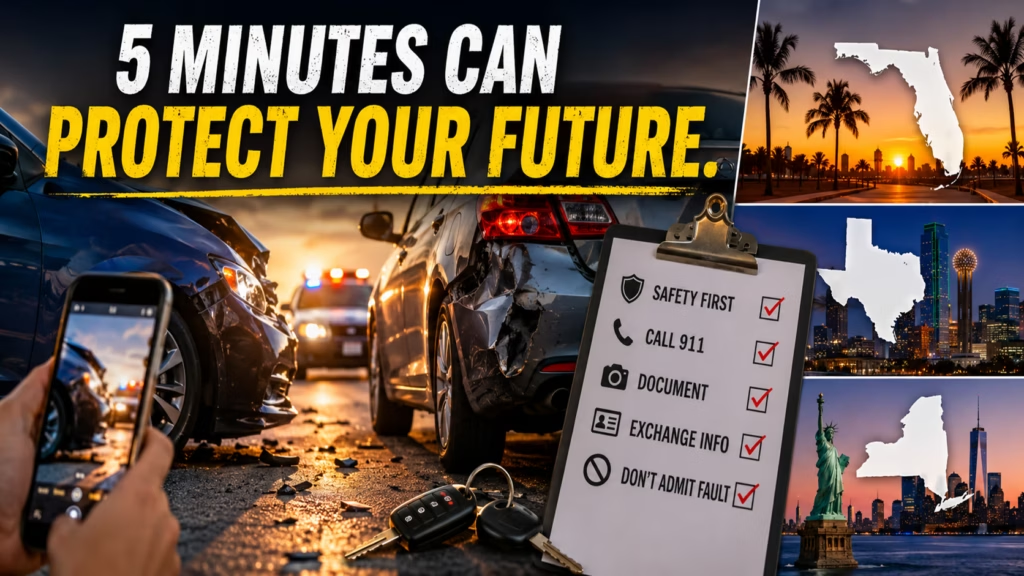
Getting into a car accident is overwhelming, but the actions you take in the next five minutes can protect you from expensive lawsuits and insurance denials. However, the rules change drastically depending on where you are. A fender bender in Miami is handled completely differently than one in Dallas or New York City.
Quick Answer: After any car accident, immediately move to safety, call 911 if there are injuries, and document the scene with photos. You must exchange information with the other driver and file a police report if damage exceeds $500 (FL), $1,000 (TX/NY), or if anyone is injured. Never admit fault at the scene.
This step-by-step checklist breaks down exactly what to do immediately after a crash, followed by the specific legal loopholes and insurance laws you need to know if the accident happens in Florida, Texas, or New York.
The Ultimate Post-Accident Checklist (Steps 1-9)
Do not rely on your memory during a stressful situation. Save this checklist:
- Stop and Protect the Scene: Turn on your hazard lights. If safe, move vehicles out of traffic. Never leave the scene—a hit-and-run is a felony in all three states.
- Check for Injuries: Ask everyone involved if they are okay. Call 911 immediately for medical help, even if injuries seem minor (adrenaline masks pain).
- Call the Police: You need an official accident report to protect yourself from false claims. (More on state-specific requirements below).
- Exchange Information: Get the other driver’s name, phone number, driver’s license number, license plate, insurance company, and policy number.
- Document Everything Visually: Take clear photos of all vehicle damage, license plates, street signs, traffic lights, and road conditions. Take photos of the other driver’s insurance card.
- Gather Witness Information: Bystanders leave quickly. If someone saw the crash, get their name and phone number before they walk away.
- Do NOT Admit Fault: Do not say “I’m sorry” or “It was my fault.” Even polite apologies can be used against you in court or by insurance adjusters.
- Seek Medical Attention: Even if you feel fine, see a doctor within 24 hours. Soft tissue injuries (whiplash) often don’t appear until hours later.
- Notify Your Insurer: Report the accident to your insurance company as soon as possible to start the claims process.
State-by-State Laws: Florida, Texas, and New York
Here is where it gets tricky. Insurance laws dictate how you get paid for your car and your medical bills.
🟧 Florida: Strict No-Fault State
Florida operates under a no-fault system. This means your own insurance pays for your medical bills, regardless of who caused the crash, through your PIP (Personal Injury Protection) coverage.
- Reporting Law: You must report the accident to law enforcement if there is injury, death, or property damage exceeding $500.
- PIP Limits: Florida only requires $10,000 in PIP coverage. If your medical bills exceed this (which is common in 2026), you may have to pay out of pocket unless you have MedPay.
- The “Significant Injury” Loophole: You cannot sue the at-fault driver for pain and suffering unless your injuries are deemed “significant” (permanent injury, significant scarring, or death).
🟨 Texas: At-Fault (Tort) State
Texas is an at-fault state. The driver who caused the accident (or their insurance) is responsible for paying for your medical bills, lost wages, and vehicle damage.
- Reporting Law: You must file a crash report (CR-2) with the Texas Department of Transportation if the accident caused injury, death, or property damage over $1,000.
- Minimum Liability: Texas requires 30/60/25 coverage ($30k per person, $60k per accident, $25k for property). With 2026 repair costs, $25,000 barely covers a moderate fender bender.
- Modified Comparative Fault: Texas uses a 51% bar rule. If you are found to be 51% or more at fault for the crash, you get zero money. If you are 40% at fault, your payout is reduced by 40%.
🟦 New York: Strict No-Fault State
New York also uses a no-fault system, but with much stricter requirements and higher minimums than Florida.
- Reporting Law: You must report to the police (and file an MV-104 form) if there is injury, death, or property damage over $1,000.
- High PIP Limits: NY requires $50,000 in PIP coverage, which is much better for covering initial hospital visits than Florida’s $10k limit.
- The “Serious Injury” Threshold: Similar to FL, you cannot sue for pain and suffering unless you suffer a “serious injury” (fracture, disfigurement, permanent loss of a body part, or 90 days of significant disability).
What if the Other Driver Has No Insurance?
This is a massive problem in Florida, where an estimated 20%+ of drivers are uninsured.
- Florida: UM/UIM (Uninsured/Underinsured Motorist) coverage is *not* required, but if you declined it, you may have no way to recover your medical bills if hit by an uninsured driver.
- Texas: Insurers *must* offer you UM/UIM coverage. If you signed a waiver to decline it, you are taking a massive financial risk.
- New York: Requires UM coverage matching your bodily injury limits ($25,000/$50,000 minimum).
Should You Pay Out of Pocket or File a Claim?
If it’s a minor scratch on your bumper and you are at fault, paying out of pocket (around $500-$800) might save you from a 20% to 40% rate increase over the next 3 to 5 years. However, always notify your insurer about the accident. If the other driver suddenly claims whiplash two weeks later and you never reported the crash, your insurer could deny coverage, leaving you personally liable for tens of thousands of dollars.
Frequently Asked Questions
Do I need a police report for a parking lot accident?
Yes, if there is damage exceeding the state threshold ($500 in FL, $1,000 in TX/NY). If you just bump bumpers and agree to handle it privately, you can skip the police, but you are taking a risk if the other driver changes their story later.
How long do I have to file an insurance claim after an accident?
You should report it to your insurance company within 24 to 72 hours. Legally, the statute of limitations to file a lawsuit against an at-fault driver is 2 years in Florida and Texas, and 3 years in New York. However, waiting that long to tell your insurer is a bad idea.
Will my rates go up if the accident wasn’t my fault?
In at-fault states like Texas, your rates generally won’t go up if the other driver’s insurance accepts 100% liability. However, in no-fault states like Florida and New York, your rates may still increase slightly simply because you filed a PIP claim, as insurers view you as statistically more likely to be in another accident.
Check Your New Rates Before Renewing
An accident—especially an at-fault one—will change your insurance profile overnight. Don’t just blindly accept your insurer’s new premium at renewal. Enter your ZIP code and updated driving record below to see how your post-accident rate compares to other top carriers in your state in under 30 seconds.
Sources: Florida Highway Safety and Motor Vehicles (FLHSMV), Texas Department of Insurance (TDI), New York Department of Motor Vehicles (NYDMV), Insurance Information Institute (III).